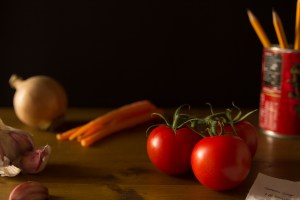
On Reflection … Week 1, Module Two

And onwards to Module Two.

Despite still not having fully recovered from the cold virus which decided to join the household at Christmas, the first week back to studying came as a welcome event.

“Where are you now?”

This was the first question out of the box for week one of module two.

And so followed a very interesting self-analysis of my photography, where it has been, where it is now and where I envisage it going in the future.

I have to say that I found this a good way to ease back into studies post-Christmas break. Feedback from fellow students was very insightful and most encouraging – certainly suggesting that my project proposal and associated work in progress is being viewed receptively (which certainly hasn’t been the case in some quarters).

Having established, or at least having had a stab at establishing, where I am, what next?

The next concept with which to wrestle was the ontological nature of my photographic practice.

In layman’s terms – what are the characteristics of my photography?

Not such an easy concept to appreciate. I think we are much more accustomed to thinking about our photographic “style” than we are of thinking about our photography in terms of “characteristics”.

I think the idea of how my photography exists, the form it takes, and how this translates into an “entity” appreciable by its characteristics is something that needs incubation, an idea that needs to germinate. This is something I intend to continue to look into because I think defining the “nature” of my photography is inextricably linked to further defining the audience for my work.

First thoughts, though, I think it both fair and accurate to say that I felt a degree of resonance with Szarkowski’s analysis of what a photograph is and how its “form” may change (Szarkowski, J. 1980. The Photographer’s Eye. London, Secker and Warburg).

On a different tack … …

In terms of my project proposal, I have continued to look into how the techniques of the great masters can be applied effectively in order to produce images which have a social relevance.

Why the need for a “social relevance”? Well, apparently, the concept of having a social relevance to my images is the strongest and most appealing facet of my proposal (incidentally, not a theory I necessarily subscribe to but I’ve picked up the ball and I’m running with it … …).

How do I happily marry these two concepts? This has been, shall I say, a “thorny” issue, at times a seemingly intractable problem.

Finding a “vehicle” which will successfully carry two seemingly different ideas, each of which could exist as discrete projects in their own right, hasn’t been easy, it’s taken some thought.

“The scales have fallen from his eyes.”

One possible narrative may be to look, progressively, at our relationship with food as it extends from production to consumption. This is an interesting area for exploration, and something I would like to look at closely – but in another time and another place.

Much more interesting for me (at least at the moment), is an exploration of the social, ethical and political issues associated with how we produce, consume (or do not consume) our food.

Oh, and not forgetting to mention that during the last week I saw an image which sparked an idea for a very different way in which some of my still-life images could be photographed. Something I am looking forward to experimenting with.

And finally … …

This week’s webinar was initially viewed with the usual level of trepidation. However, a new year and a new start … … and a new format.

Out with presentations, in with tutor-led question and answer sessions.

The new format was very unexpected. Most students had prepared the previously obligatory PowerPoint slides – the very small number that hadn’t had experienced technical issues preventing this. Initially, there was some slight vexation that the presentations wouldn’t be needed. However, there was unanimous post-webinar agreement that the new formula was a winning one.

Consensus was that the question-and-answer style made for a much more relaxed environment which, in turn, was much more conducive to learning. By mutual agreement, all students felt that they had taken something highly beneficial away from the webinar which had been a positive experience. This is most certainly true in my case.

Long live the new webinar format say I, a sentiment which I know is very much echoed by my fellow students!
The Characteristics of Photography

The ontological nature of my photographic practice … …

The “characteristics” of my photographic practice took some time and thought to identify: I think we are much more accustomed to thinking about our photographic “style” than we are of thinking about our photography in terms of characteristics.

Szarkowski identifies the “actual” as one of five characteristics of photography. By this he refers to the reality of the situation where the photographer decides to capture a specific moment in time, photographing what is there, and uses that reality to infer something beyond – that which is seen and that which is not seen.

Does this perceived reality apply equally to all genres of photography?

One area where it may not hold quite so true is that of still-life food photography where images contain an element of both selection and synthesis –  the photographer chooses the subject and its environment (selection) which are then arranged to produce a visually appealing composition (synthesis).

The still-life photographer can exercise control over almost every aspect of a photograph including, for example, the texture and colour of the background.

This is in contrast to some types of photography where the photographer has less control over the subject and its environment, for example, street photography where the level of “control” the photographer has over the subject and the environment is limited to where to frame up and when to press the shutter release (excepting post-production manipulation of course).

Time is also given by Szarkowski as a characteristic of photography. This ties in with Cartier-Bresson’s “decisive moment” where the photographer needs to decide when to operate the shutter mechanism: knowing when to press the shutter can mean the difference between “taking” and “making” a photograph. This implies a pre-obtained knowledge of events, for example, an awareness that a person’s image will be reflected in a window as they pass by a shop and knowing when to release the shutter in order to capture the person and their reflection.

You bring your own time to still-life photography. Images are constructed, possibly over lengthy periods of time taking into account the lapse between the initial spark of an idea and the final image being produced with small, incremental and progressive adjustments being made in order to achieve an abstract reality and add detail, another characteristic identified by Szarkowski, bringing authenticity to a less than real reality for the still-life photographer.

Shore describes prints as being “flat” and having “edges”. However, what I strive for as a photographer is realistic two-dimensional representation of a three-dimensional experience. Again, detail plays a large part in achieving this, as does the skilful use of photographic equipment.

As stated in “Photography, Photographies”, Szarkowski’s characteristics focus on the photographer. However, I feel it extends beyond that with many of the characteristics relating to the way we operate our cameras with timing, for example, being linked to shutter speed, framing being linked to focal length, and the “actual” and detail being closely associated with the framing of the subject.

Perhaps, then, Szarkowski’s “characteristics” are as relevant when we actually take a photograph, the physical process of taking a photograph, as when we think about how, when, where and by whom the image will be consumed.

At this juncture, my photographic practice is split into two discrete areas: commercial and project work.

To date, commercial work, has been undertaken on a project brief basis for small, independent organisations operating in catering and food retail. Consequently, contexts for this type of work have been printed work, magazines, promotional literature and websites.

This area of work is greatly removed from my project work, the contexts for which are mainly my CRJ to date with an online gallery being in development.

Evaluating my photographic practice in terms of characteristics has been an interesting and enlightening process for me, one which has certainly given me a lot to think about.

Where Am I Now?

Where is my current practice?

My area of interest is food photography. This genre of photography has a particular ability to appeal to me, to grab my attention – something resonates with me.

Food photography is ubiquitous with the majority of photographs being made to support recipes and, consequently, existing almost exclusively in recipe books and magazines. Comparatively, very few images are made to exist in their own right – as pieces of art.

Initially, the images I made fell into this category. OK, they were taken by me to be photographs of interest, the intention being for people to look at the images for their visual appeal and not purely to see how a recipe might or should turn out. But, the style was conforming to the generic “commercial” formula.

I want my photography to develop. I want my work to progress to a point where it successfully occupies a niche: to be different, unique, attention grabbing, visually appealing, going beyond a mere commercial brief.

It is my belief that images of food can, and should, exist as standalone works of art with a beauty and appeal of their own. To be different and make this kind of image has been a conscious choice.

I think I have found some success in being able to previsualise the images I want to make and subsequently achieve this vision – even if my images had a more “editorial” style in the early days.

Being self-critical isn’t something that comes easily to me. I know when I am satisfied with an image and it is of a standard where I am happy to look at my image myself and to share it with others. I also know when I am not. However, this has generally been an instinctive feeling as opposed to something rationalised and related to critical thinking.

So, being self-critical is something I have had to work at. Have my images “suffered” as a result, or more correctly, has my photographic progress and development been retarded by that?

Very possibly. And that is a weakness I am addressing.

How do I see my photography progressing?

First and foremost, I think it is important that I learn from my failures as much as I do from my successes. Ambiguity can be a good thing because, if you accept it, it forces you to interrogate things more thoroughly.

Elaborating on that, the feedback from the first assignments was most enlightening and has given me a considerable amount to think about.

With that in mind, I plan to continue to explore the knowledge and techniques used by the great masters to produce their amazing still-life images. This investigation will concentrate on three specific areas: the techniques and equipment they used to control light, their knowledge of compositional techniques, and their use of symbolism and their sources of knowledge for this.

Will this help me to successfully occupy a niche? On its own, possibly not and a lot would depend on execution.

I certainly think that this will help me to occupy a niche. My intention is to develop my storytelling ability. Yes, I want to produce beautiful images which have their own visual appeal, but that doesn’t mean that they have to be devoid of meaning.

Food is absolutely essential to our existence, that much is obvious but what may not be so obvious is that we seem to treat our food as a very “disposable” commodity – something largely taken for granted, the way we produce it and consume it (or not) raises some ethically complex issues.

Combining the results of my investigations into the work of the Dutch masters with subject matter which explores our relationship with food, using the former to support the latter, will allow me to produce images which are unique in their nature.

Additionally, I will experiment with post-production techniques with a view to giving my images a “painterly” aesthetic and have a plan to do this which includes, for example, the use of textures, underlays and overlays.

I have a target market in mind and I am researching this further, clarifying and defining the “audience” for my work. Additionally, I am researching how notable photographers have successfully defined their target market and subsequently presented their offerings.

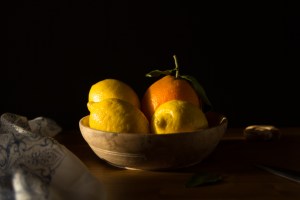
still-life-with-cirtus-fruit-l

Morris, 2016. Still-life with Citrus Fruit

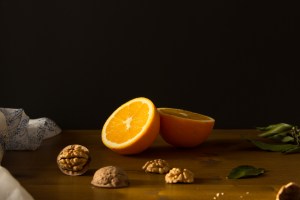
still-life-with-orange-and-walnuts

Morris, 2016. Still-life with Orange and Walnuts

tomato-soup

Morris, 2016. Tomato Soup