‘Without images how would I know what you see? I don’t know what you see. I’ll never know, but these flat images are the only things that connect up between us.’
– David Hockney
‘Without images how would I know what you see? I don’t know what you see. I’ll never know, but these flat images are the only things that connect up between us.’
– David Hockney
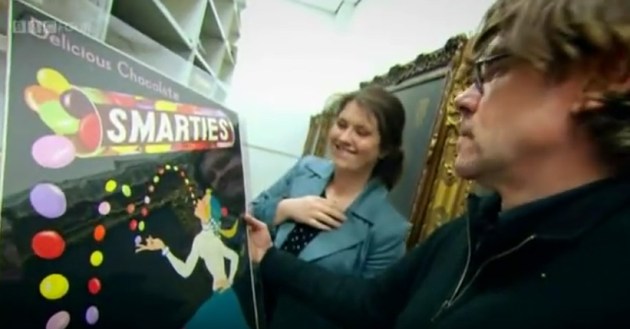
Nigel Slater & Archivist Alexandra Hutchinson examine original Rowntree’s artwork
(Life is Sweets, BBC Four, 2012)
A week of decisions as the deadline for the module four assignments creeps closer …
I continue to be aware of the tension between commercial work and project work: trying to reconcile the differences and appreciate the similarities.
Photography as a tool for research in the fields of visual anthropology and social science is of increasing interest to me.
As much as I love food imaging my research has led me to question the function of commercial food photography, recently describing it as the art of persuasion. What does it offer beyond an open invitation to exchange money for food or drink?
From a visual anthropological point of view, contemporary food photography can be viewed as an invaluable source of information, recording the way we eat and our relationship with food for future generations.
5 November 2012, BBC Four and Nigel Slater guides us through the story of his life as recollected in sweets: toffees that inspired him to write a memoir, marshmallows and travel sweets which remind him of his mother and father respectively.
During the documentary, Slater outlines the growth of confectioners Rowntree and in doing so meets company archivist and historian Alexandra Hutchinson.
Together, they examine original artwork from the Rowntree archives.
Proof that commercial imaging plays a valuable role in recording our social history.
As is often the case, more questions than answers …
Who uses images? What are they used for? What is the life cycle of food images? Is there a different life cycle for images from a commercial perspective? And from a domestic perspective?
How do compare contemporary food images with early food images? How has food imaging evolved? How does food imaging fit into an historical context? And other contexts?
Rephotography is typically used as a tool to measure how geographical or architectural features change over a period of time with images being taken from an exact location, which is repeatable and reproducible, at pre-determined increments of time.
Food photography is different, the subjects being extremely ephemeral in nature and with no fixed coordinates to return to. By maintaining a record of how packaging evolves over time, food manufacturers are capturing important data in the same way that social scientists, geographers, geologists and architects are capturing data regarding glacial movements and the ebb and flow of urban developments.
There’s a lot to research in this area …
Reference and Image:
BBC Four/Nigel Slater: Life is Sweets (2012) YouTube Video, added by Elle [Online]. https://www.youtube.com/watch?v=q5Y5YIXJgs8 (accessed 09 November 2017)
‘Photography is all right if you don’t mind looking at the world from the point of view of a paralysed Cyclops.’
– David Hockney
Brief: ‘create and implement an Instagram strategy that you feel will help you reach future, potential clients (whether ad agencies, curators or potential collectors), and then develop your account so you have 30 followers over the course of a week’ (Pfab, 2017).
An Instagram account has been set-up: philipmorrisphotography
Based on initial feedback from the operation of this account plus feedback from the ‘sharethesmarties’ viral image campaign, a successful Instagram strategy appears to include the following:
Key to (successfully) posting images is frequency, consistency and timing
The appropriate addition of succinct text to images
Use of hashtags – quality, quantity and frequency count
Following and being seen to follow other Instagram accounts.
Based on this strategy, appropriate metrics will be collected and analysed. The results will then be used to inform the Instagram element of a marketing plan extending into 2018.
–
‘Many photographers approach Instagram in much the same way they would a personal sketchbook, but one in which images are viewed publicly. In this sense, using Instagram can become a natural extension of their professional practice’ (Heinz, 2017).
I think Heinz raises a salient point. There are significant advantages to Instagram as both a marketing tool and a portfolio. However, there are significant disadvantages also, namely the loss of fidelity when an image is uploaded to the platform, and the fact that there is no direct means of loading images to the platform direct from a PC.
On this basis, can it be much more than a sketchbook, a tool for recording moments of inspiration for future reference?
Reference:
Heinz, Lauren (2017), ‘5 Instagram Lesson from Magnum Photographers’, magnumphotos.com [online]. Available at: https://www.magnumphotos.com/theory-and-practice/instagram-lessons/ (accessed: 19 October 2017)
Pfab, Anna-Maria (2017), ‘Sustainable Prospects’: Instagram. Falmouth: Falmouth University [Online]. Available at: https://flex.falmouth.ac.uk/courses/84/discussion_topics/2794 (accessed: 19 October 2017).
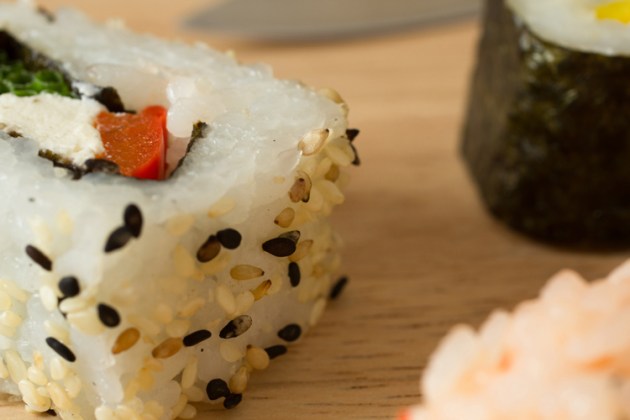
Morris, 2013. Sushi
What was it that inspired me to become a photographer?
The work of Czech photographer had an effect upon me from first glance.
Sudek’s images are photographic impressions which represent light as a substance which occupies its own space, which has a presence of its own rather than merely influencing the way a three-dimensional subject is shown in a two-dimensional format.
The influence of Clarence White is visible in Sudek’s earlier work – highlights glint from within deep shadows cast by dimly lit interiors, the same highlights appear to glow in a manner which can only be described as vaguely Orton-esque.
Sudek was a master of capturing the ambience of an images lighting – highlights seem to retain the character of the natural light which was their source – it takes very little effort to discriminate between images taken in cold, wintry or warm, summery light and the viewer is immediately transported to another place, another time.
I would go as far as to suggest that the highlights in Sudek’s images have an aura.
The paintings of the old Dutch masters were also a significant influence.
Perhaps, though, the actual catalyst was an article, published in a popular photography magazine in the autumn of 2010, describing how to use light painting to produce still-life photographs in the style of the oil paintings of the Dutch golden era. By the time I read this article I was already using a camera but had yet to find my genre and had yet to find my style.
It is fair to say that this article set me firmly on the route which I now take.
Returning to an early example of my work.
Sushi is an image taken in 2013, in the early days of my food photography – having found a genre which worked for me, a genre which I felt comfortable working with.
I remember taking this photograph. Working intuitively the result was a close up shot which placed the viewer in the scene with the subject, achieved by shooting ‘over the shoulder’ of some minor subjects.
It remains an image I am both pleased with and proud of.
As previously discussed, this image has considerable value for me in evaluating how my technical and creative ability have developed over time.
So much for looking back. Why do I continue to photograph?
Photography can, for me, be a double-edged sword. I want to produce beautiful images of food, I want to produce beautiful still-life images. Some of the work I produce excites me, some work disappoints me. Some manages to do both at different times.
Working with my camera is a way for me to interact with the world. It is a way to explore – often producing more questions than answers.
I am increasingly interested in the way that photography can be used as a tool for visual anthropology, as a tool for social science.
Pfab (2017) suggests ‘what sort of photographer are you?’ is a question familiar to most professional photographers.
She continues:
‘There are many labels you can give yourself: documentary photographer, food photographer, fashion photographer, commercial photographer or stock photographer, among others. But which one is right for you?
Is it important to know? Do you need to specialise?’
Pfab explains her position on this very succinctly: ‘I think you do, because if you don’t know what your final destination is, then you will never reach it.’
How, then, can specialisation be achieved? Put another way, although seemingly obvious, what is specialisation?
According to Pfab:
‘Most photographers therefore specialise, at least in style but often also in subject matter – this will help you stand out and make your work recognisable – but you don’t necessarily have to limit your client area or market. So it might be your unique lighting technique, style or colour palette – Nadav Kandar is a great example here – or it might be your subject matter. I believe it’s important to find your niche: how else will a future client identify and remember you? A consistent portfolio stands out, and is much more likely to be remembered than a portfolio full of varying styles, colour palettes and lighting styles.’
Pritchard (2012) outlines the following advantages of specialising:
There is more chance of being remembered when a suitable job comes up
If you choose one area that you genuinely are interested in and enjoy, you will naturally take better pictures and be more motivated
There is more likelihood of your becoming an expert in one area if you spend more time on this one area
It will make a potential client feel confident that they are making the right decisions, thereby giving you a better chance of getting the job
Having a niche generally gives you focus and direction. You can put all your efforts into one area and not be distracted.
As previously discussed (see ‘Down to Business’), and it’s well worth repeating, Scott (2014) identifies three different types of professional photographer:
‘The first is the high-end professional who works with a cross section of professional clients within one or across a wide spectrum of photographic genres. They are defined by a high quality client base, which in turn results in a strong financial reward for their work.
The second is the general professional who also works with a cross section of professional clients within one or across a wide spectrum of photographic genres. They have a slightly less prestigious client base and therefore receive a lesser financial reward for their work. The general professional aspires to be a high-end professional. They usually come from a creative academic background and are informed by the work of their peers. Both of these areas are focused on creating, keeping, and enlarging their commercial client base.
The third is the domestic professional. They do not work for professional clients whose job is to commission photography, but rather they work in the wedding, events, and domestic portrait market. This sector is most often self-taught, regionally focused, and dependent on constantly finding new clients, as the clients they have rarely recommission due to the nature of the reasons for their commissions. The domestic professional is an area that also appeals to the semi-professional, as they do not have to always be available for commission and much of the work is weekend based.’
Scott, then, suggests that it is possible for professionals at the pinnacle of the career to operate successfully across a number of photographic genres. Pfab, on the other hand, is in agreement that it is better to specialise.
Is there any common ground that can be found within this?
I think the two key statements are Pfab’s suggestion that specialisation can be ‘at least in style but often also in subject matter’, and that specialisation ‘might be your unique lighting technique, style or colour palette … or it might be your subject matter.’
Here she is very clearly indicating two possible options.
Firstly, to specialise in terms of subject matter (just not being too specialised).
Secondly, developing a signature style to operate successfully over a range of genres.
Relevance for my photographic practice?
I have been very aware recently of the need to develop a marketing plan, and the place that this occupies within Sustainable Prospects. This requires a clear and concise definition of my work, and this requirement has consequently led me to question what exactly my work is and how this relates to how I define myself as a photographer.
Sometimes, I think, it is necessary to disengage from an idea and to explore other options in order to see both the strengths and weaknesses of the original idea – in effect providing a benchmark.
It is through such dissonance that surety results. It is only through critical evaluation, with the possibility borne in mind that one’s beliefs could be wrong, that the positives and negatives of any idea can be fully appreciated.
This is about making art that is saleable – a commodity that people want to invest in.
There are many clear advantages in specialising, from a commercial point of view. Operating as a food photographer commercially does not (and should not) preclude me from working in other genres, this can be classed as personal project work and showcased accordingly.
Professional practice, like so many things in life, is about finding a compromise and I think this solution finds a happy medium. But rest assured, one thing which will never be compromised is quality … the intention, at all times, being to exceed expectations.
References:
Pfab, Anna-Maria (2017), ‘Sustainable Prospects’: Defining Your Photographic DNA. Falmouth: Falmouth University [Online]. Available at: https://flex.falmouth.ac.uk/courses/84/pages/week-4-defining-your-photographic-dna?module_item_id=5351 (accessed: 14 October 2017).
Pritchard, L. (2012), Setting Up a Successful Photography Business. London: Bloomsbury Printing plc
Scott, G. (2014), Professional Photography: The New Global Landscape Explained. Oxon: Focal Press
‘“I am a photographer, I take photographs,” that is and has always been the spine of any photographer’s professional practice. But is it enough today?’ (Scott, 2015).
Those who are in a position to commission work are aware that images are no longer always still, and they are aware of podcasts, and post-production techniques. They are aware of a whole range of methods by which photographic work can not only be disseminated but also created as a result of new technology.
They are also aware of social media.
Fundamentally, Scott writes: ‘they may not be fully informed about everything but they will expect you to be. They will expect you to be exploring the opportunities that the new environment brings and to be doing so passionately and with excitement.’
Time, then, for me to embrace the entity described as ‘social media’.
Distilled, social media is simply a variety of software packages. It is the user-generated content which prevents such applications from being little more than digital code.
It is no longer, in my view, sufficient for a photographer to be able to operate a camera. Instead one needs to be a social animal, one needs to understand how social media software works. And in order to understand that, one needs to understand how people work.
Social media is now an extremely cost-effective method of marketing. Instagram, Facebook, Twitter, etc. fundamentally operate by the creation of communities of like-minded individuals. Key to harnessing the power of social media in a marketing campaign is to understand how to identify these communities and direct them towards your website. The crucial element then is understanding how to successfully convert site visits into page views, and page views into revenue.
These are areas for ongoing research and development over the forthcoming ten-week period.
–
The phrase ‘absolute narcissism, and crippling self-doubt’ is, for me, very apt.
Whilst an idea may stay fresh in my mind’s eye and have perpetual visual appeal, the reality that quite often sits before me is somewhat different.
The dissonance caused by first looking at an image and thinking it to be excellent, then seeing the same images on another occasion and thinking it to be second-rate at best is remarkable.
But how would we progress, evolve, develop as artists without the self-interrogation that arises from such dissonance?
Where else would our critical thoughts come from?
Reference
Scott, G. (2015), Professional Photography: The New Global Landscape Explained. Oxon: Focal Press
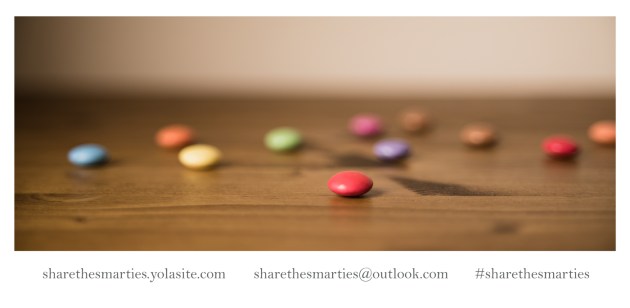
Morris, 2017. ShareTheSmarties
A social media experiment.
The brief: ‘make an image that you feel is intriguing and appealing, and spread it around as many places as possible.’
My aims for sharethesmarties as follows:
Determine the extent to which any textual content accompanying an image is complied with
Establish the effectiveness of various social media platforms
Assess the effective reach of a website within the context of a short-term project
Increase the number of Instagram account followers
Explore the use of hashtags.
The intention was for the life of the project to be short – two weeks maximum. However, it was also planned for the project to have a series of iterations in order to determine, for example, if different levels of textual content help the image to be spread in a viral manner.
After one week the results are rather inconclusive, rather as expected.
The first iteration saw the image accompanied by very limited text.
The image was made available on Facebook, Instagram, via a dedicated website, and was also emailed to personal contacts. Results as follows:
Instagram – the image was liked six times, the number of followers was increased by six
Facebook – the image was shared 4 times, and liked 9 times
Website – 13 visitors, making 16 visits with 35 page views.
The project as it stands, Phase One, has another week to run. I think in order for even the most intriguing and appealing image to be spread virally there has to be an incentive. So, the second phase will include a succinct message – in effect a strapline – outlining the purpose of the project.
As social media is such a cost-effective means of disseminating work, investing time in further research is more than justified.
‘I discovered that this camera was the technical means in photography of communicating what the world looks like in a state of heightened awareness. And it’s that awareness of really looking at the everyday world with clear and focused attention that I’m interested in.’
– Stephen Shore
An interesting change in direction this week as attention is turned towards the practicalities of running a business rather than the theory or practice of image making.
What are the qualities which make artistic output a saleable commodity?
Phrased another way, what are the characteristics which create a desire in a viewer to own an artwork?
From the photographer’s point of view, what must be done to create enough interest in one’s work to elicit a transaction on the part of a client?
Output has to be unique but also consistent. It has to demonstrate a clear creative and technical ability and it has to provide a narrative – whether as a standalone piece or part of a series.
I think it is fairly normal to think of oneself as a photographer specialising in one particular genre. But, as discussed elsewhere, this seems to be a restrictive practice which will results in closing off certain avenues of work.
The remedy to this, in my view is to develop a unique look which is discernible across a range of genres – in effect allowing the photographer to be defined by a personal style rather than by a genre.
But what sells? By that I mean what really sells?
Questions I am sure most photographers (and artists) have asked themselves:
‘Why that image and not this?’
Why his (or her) work and not mine?’
And, logically from this, where do boundaries fall? How do we classify? The relevance being, how does one describe one’s photographic output? This being necessary before any potential markets can be identified (if you don’t know what you are producing, how do you know who you will sell to?)
Take, for example, fine art photography? Does it even exist (as a genre)?
The University of Oxford advertises it’s BFA by explaining that fine art is the making and study of visual art.
Using this as a basis, all photography is fine art.
The Oxford English Dictionary provides us with the following definition:
Originally: the creative arts, including the visual arts, poetry, music, rhetoric, etc., whose products are intended to be appreciated primarily or solely for their aesthetic, imaginative, or intellectual content; (now usually) spec. the visual arts, esp. painting and sculpture, viewed in this way. Also: these arts as a subject of training, study, or examination (OED, 2017).
Taking this as a working theory, is fine art as a genre actually a misnomer which has become a pseudo-entity based on strength of numbers (in this case, strength of numbers in terms of those labouring under a misapprehension)? If enough misinformed individuals repeat a phrase without meaning, does that phrase take on meaning?
I think this is an interesting area for further research, with a relevance to how photography is marketed.
References
“Fine art, n.”. OED Online. Oxford University Press, October 2017 [Online]. Available at: http://www.oed.com/view/Entry/70365?redirectedFrom=fine+art#eid (Accessed 07 October 2017).
 The Photographic Art of Food - An MA Photography Project