On Reflection: Week 3, Module Four

‘“I am a photographer, I take photographs,” that is and has always been the spine of any photographer’s professional practice. But is it enough today?’ (Scott, 2015).

Those who are in a position to commission work are aware that images are no longer always still, and they are aware of podcasts, and post-production techniques. They are aware of a whole range of methods by which photographic work can not only be disseminated but also created as a result of new technology.

They are also aware of social media.

Fundamentally, Scott writes: ‘they may not be fully informed about everything but they will expect you to be. They will expect you to be exploring the opportunities that the new environment brings and to be doing so passionately and with excitement.’

Time, then, for me to embrace the entity described as ‘social media’.

Distilled, social media is simply a variety of software packages. It is the user-generated content which prevents such applications from being little more than digital code.

It is no longer, in my view, sufficient for a photographer to be able to operate a camera. Instead one needs to be a social animal, one needs to understand how social media software works. And in order to understand that, one needs to understand how people work.

Social media is now an extremely cost-effective method of marketing. Instagram, Facebook, Twitter, etc. fundamentally operate by the creation of communities of like-minded individuals. Key to harnessing the power of social media in a marketing campaign is to understand how to identify these communities and direct them towards your website. The crucial element then is understanding how to successfully convert site visits into page views, and page views into revenue.

These are areas for ongoing research and development over the forthcoming ten-week period.

The phrase ‘absolute narcissism, and crippling self-doubt’ is, for me, very apt.

Whilst an idea may stay fresh in my mind’s eye and have perpetual visual appeal, the reality that quite often sits before me is somewhat different.

The dissonance caused by first looking at an image and thinking it to be excellent, then seeing the same images on another occasion and thinking it to be second-rate at best is remarkable.

But how would we progress, evolve, develop as artists without the self-interrogation that arises from such dissonance?

Where else would our critical thoughts come from?


Reference

Scott, G. (2015), Professional Photography: The New Global Landscape Explained. Oxon: Focal Press


Without Walls …

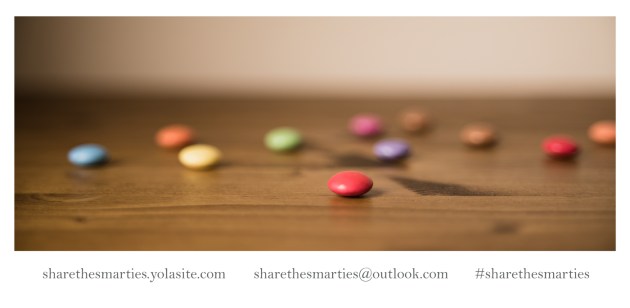
sharethesmarties-5

Morris, 2017. ShareTheSmarties

A social media experiment.

The brief: ‘make an image that you feel is intriguing and appealing, and spread it around as many places as possible.’

My aims for sharethesmarties as follows:

Determine the extent to which any textual content accompanying an image is complied with

Establish the effectiveness of various social media platforms

Assess the effective reach of a website within the context of a short-term project

Increase the number of Instagram account followers

Explore the use of hashtags.

The intention was for the life of the project to be short – two weeks maximum. However, it was also planned for the project to have a series of iterations in order to determine, for example, if different levels of textual content help the image to be spread in a viral manner.

After one week the results are rather inconclusive, rather as expected.

The first iteration saw the image accompanied by very limited text.

The image was made available on Facebook, Instagram, via a dedicated website, and was also emailed to personal contacts. Results as follows:

Instagram – the image was liked six times, the number of followers was increased by six

Facebook – the image was shared 4 times, and liked 9 times

Website – 13 visitors, making 16 visits with 35 page views.

The project as it stands, Phase One, has another week to run. I think in order for even the most intriguing and appealing image to be spread virally there has to be an incentive. So, the second phase will include a succinct message – in effect a strapline – outlining the purpose of the project.

As social media is such a cost-effective means of disseminating work, investing time in further research is more than justified.

On Reflection: Week 2, Module Four

An interesting change in direction this week as attention is turned towards the practicalities of running a business rather than the theory or practice of image making.

What are the qualities which make artistic output a saleable commodity?

Phrased another way, what are the characteristics which create a desire in a viewer to own an artwork?

From the photographer’s point of view, what must be done to create enough interest in one’s work to elicit a transaction on the part of a client?

Output has to be unique but also consistent. It has to demonstrate a clear creative and technical ability and it has to provide a narrative – whether as a standalone piece or part of a series.

I think it is fairly normal to think of oneself as a photographer specialising in one particular genre. But, as discussed elsewhere, this seems to be a restrictive practice which will results in closing off certain avenues of work.

The remedy to this, in my view is to develop a unique look which is discernible across a range of genres – in effect allowing the photographer to be defined by a personal style rather than by a genre.

But what sells? By that I mean what really sells?

Questions I am sure most photographers (and artists) have asked themselves:

‘Why that image and not this?’

Why his (or her) work and not mine?’

And, logically from this, where do boundaries fall? How do we classify? The relevance being, how does one describe one’s photographic output? This being necessary before any potential markets can be identified (if you don’t know what you are producing, how do you know who you will sell to?)

Take, for example, fine art photography? Does it even exist (as a genre)?

The University of Oxford advertises it’s BFA by explaining that fine art is the making and study of visual art.

Using this as a basis, all photography is fine art.

The Oxford English Dictionary provides us with the following definition:

Originally: the creative arts, including the visual arts, poetry, music, rhetoric, etc., whose products are intended to be appreciated primarily or solely for their aesthetic, imaginative, or intellectual content; (now usually) spec. the visual arts, esp. painting and sculpture, viewed in this way. Also: these arts as a subject of training, study, or examination (OED, 2017).

Taking this as a working theory, is fine art as a genre actually a misnomer which has become a pseudo-entity based on strength of numbers (in this case, strength of numbers in terms of those labouring under a misapprehension)? If enough misinformed individuals repeat a phrase without meaning, does that phrase take on meaning?

I think this is an interesting area for further research, with a relevance to how photography is marketed.


References

“Fine art, n.”. OED Online. Oxford University Press, October 2017 [Online]. Available at: http://www.oed.com/view/Entry/70365?redirectedFrom=fine+art#eid (Accessed 07 October 2017).

A “Language” Understood

‘Photography is the only “language” understood in all parts of the world, and bridging all nations and cultures, it links the family of man. Independent of political influence – where people are free – it reflects truthfully life and events, allows us to share in the hopes and despair of others, and illuminates political and social conditions. We become the eye-witness of the humanity and inhumanity of mankind …’

– Helmut Gernsheim, in Sontag On Photography (1977), p. 192

Down to Business …

The business of becoming professional …

Put another way, structuring my own photographic DNA.

Scott (2015) identifies three different types of professional photographer:

“The first is the high-end professional who works with a cross section of professional clients within one or across a wide spectrum of photographic genres. They are defined by a high quality client base, which in turn results in a strong financial reward for their work.

“The second is the general professional who also works with a cross section of professional clients within one or across a wide spectrum of photographic genres. They have a slightly less prestigious client base and therefore receive a lesser financial reward for their work. The general professional aspires to be a high-end professional. They usually come from a creative academic background and are informed by the work of their peers. Both of these areas are focused on creating, keeping, and enlarging their commercial client base.

“The third is the domestic professional. They do not work for professional clients whose job is to commission photography, but rather they work in the wedding, events, and domestic portrait market. This sector is most often self-taught, regionally focused, and dependent on constantly finding new clients, as the clients they have rarely recommission due to the nature of the reasons for their commissions. The domestic professional is an area that also appeals to the semi-professional, as they do not have to always be available for commission and much of the work is weekend based.

The most successful businesses are those which find different ways to sell the same thing. A degree of diversity is good business practice. A diverse range of products together with a diverse client base equals a business which will have both a steady inflow of income whilst also being buffered against fluctuations in demand.

The offering will be marketed to a wide range of clients, the USP being an innovative and unique style of food photography resulting in images capable of entertaining, existing in their own right as objects of beauty, whilst also undertaking to inform or educate.

On the theme of diversity, to date I have had a career filled with variety. I am a trained accountant and have also studied economics and business studies. I have studied evolutionary biology at degree level. And I worked in manufacturing for many years.

It was always interesting to watch the life cycle of products and to observe the influences that affected demand.

Edward H. Simpson published his Diversity Index in 1949. It is used to measure both diversity and concentration within ecosystems. It states that systems which have a high population but low diversity (e.g. only one or two species with a high population for each species) are stressed. Conversely, systems which have greater diversity of species are not subject to the same stress.

Take for example a very simple ecosystem with one form of vegetation (grass), one prey species (rabbits) and one predator (wolves). Suppose something happens to prevent the growth of the one species of vegetation, say for example a shift in temperature, the only source of food for the prey species will cease to exist, the prey animals will therefore cease to exist and consequently there ceases to be food for the predators. The system is in under stress.

Suppose, however, that the system has a variety of vegetation. A shift in temperature is unlikely to kill off all species of grass. The prey species have a continued source of nutrition and are able to thrive, and consequently the predator species also has access to a sustained source of nutrition. This system is under less stress.

The same holds true for businesses. A business offering only one type of product, or having a single niche market is unlikely to withstand market fluctuations. Compare this scenario with a business that supplies to two different types of client. If demand for one product drops there is still another product generating revenue whilst work is carried out to research and produce a new offering. The former model is of a business which is stressed, the latter less so.

During module three I wrote as follows:

‘There are, I think, significant advantages to breaking out of a mould and trying other types of photography, advantages which will enhance my skills as a food photographer. Looking beyond a still life table (or kitchen work surface), looking for different subjects, in different areas will, I believe, improve my skills as a photographer – not least of all by improving my skill in looking, and in seeing the potential within a subject for good photograph. After all, I think I am skilled in recognising items of food which will make images with aesthetic appeal, am I adept at recognising the potential, or the opportunity, for equally interesting and appealing images in other genres?

By turning away from my subject, only briefly and periodically, by including other genres in my repertoire, I am becoming more rounded as a photographer, I am becoming more skilled over a wider subject area and acquiring skills I can bring back to my specialism. In turn, this will allow me practice my specialism in an innovative way.

Progressing the discussion: food photographer – is that a label that I wish to be identified by?

Wouldn’t it be better to be considered as a photographer who specialises in food photography? In essence, letting the images I create do the talking [as opposed to adopting the title ‘food photographer’].

The former [title] is quite constrictive. In artistic terms, it shows that my area of interest, if not my talent, lies in food photography. But in practical, commercial terms, it closes off lots of avenues for potential work.

The latter, however, leaves lots of doors open: both artistically and commercially.’

I don’t think it is commercially viable to class oneself accordingly: ‘I photograph food, therefore I am a food photographer.

Designing my ‘DNA’ as a photographer, I think there is a commercial advantage in developing a unique style that when applied to a variety of genres identifies me as the artist. This is in direct opposition to identifying oneself by a genre specific title.

I think Scott has identified, either directly or indirectly, the need for professional photographers to cover a range of genres. He also identifies a key characteristic which separates ‘high-end’ professionals from ‘general’ and ‘domestic’ professionals.

That key characteristic being quality.

Pfab (2017) elucidates on the point of quality, writing:

‘All professionals need to have the ability to create consistently strong images through clever lighting and composition as well as the ability to create a narrative within a series. And this is what sets them apart from a general member of the public with a camera’.

In summary then, a consistent output of new material which incorporates both creative and technical skill on the part of the photographer.

This is not to suggest that ‘general’ or ‘domestic’ professionals are without the skills outlined by Pfab. Moreover, it suggests that the level of quality determines the end use for photographic output.

Relevance to my photographic practice?

Clearly, well developed creative and technical ability is needed together with narrative skill in order to produce strong and meaningful photographic images, to be an effective photographer.

This discourse has highlighted the qualities which, from a commercial rather than an artistic or creative point of view, enable a photographer to produce something saleable again and again. It has also suggested that strength lies in diversification.

The focus of attention now is to discover and effectively utilise channels of distribution – in other words how to market oneself as a photographer.


See also: ‘Breaking Free


References:

Pfab, Anna-Maria (2017), ‘Sustainable Prospects’: DNA of the 21st Century Photographer. Falmouth: Falmouth University [Online]. Available at: https://flex.falmouth.ac.uk/courses/84/discussion_topics/2791?module_item_id=6495 (accessed: 30 September 2017).

Scott, G. (2015), Professional Photography: The New Global Landscape Explained. Oxon: Focal Press
Cariou v. Prince

Or Appropriation or Misappropriation II …

Yes Rasta – a series of photographs of Rastafarians taken by Patrick Cariou whilst living within a Rastafarian community – was published in book form in 2000.

Canal Zone was created by Richard Prince in 2008, the series being a number of art works which incorporated Cariou’s photographs.

The Canal Zone project involved copying and subsequently transforming original work by Cariou.

The transformations included, but were not limited to: enlargement, blurring, sharpening, content additions, and compositing.

Cariou filed against Prince, the Gagosian Gallery, Larry Gagosian (the gallery owner), and RCS MediaGroup for copyright infringement in 2009.

I think the decision reached in Cariou v. Prince is fair.

Regardless of the outcome of the case, Prince appropriated images that were created by Cariou.

He subsequently modified these and the resultant ‘art’ was tested against existing law on the basis that Cariou’s copyright had been infringed.

25 out of 30 cases of alleged copyright infringement were found to be ‘fair use’ and the remaining five were referred back down to a lower court for a judgment to be passed.

Art has been, and continues to be, influenced by the previous work of artists: appropriation of images is quite common, especially in the digital age.

I think the real issue here is with the way that Prince appropriated the images.

Was it appropriation? Or was it misappropriation?

Tate.org.uk defines appropriation accordingly: ‘Appropriation in art and art history refers to the practice of artists using pre-existing objects or images in their art with little transformation of the original’ (Tate.org, ca. 2017).

The law recognises the end use to which existing images may be put: differentiating between situations where images are appropriated for educational purposes or for creative purposes. Nevertheless, some basic form of recognition is expected. Setting everything else aside, it is common sense, if not common courtesy, to initiate some sort of contact with the originating artist in cases where the intention is to use existing art as a basis for new creative projects.

I think this is especially important in two situations, neither of which preclude the other: 1). where the original art is recognisable, 2). where the modified art will result in an inflow of revenue.

Cariou v. Prince bears striking similarity with ‘Joywar’ – in both cases images are appropriated without any attempt to seek permission from, or even communicate intentions to, the originating artist.

Nicaragua, 16 July 1979 and photographer Susan Meiselas captures an image that will become an icon representing a pivotal point in the country’s political history.

A petrol bomb is about to be thrown at a Somoza national guard garrison shortly before the Sandinistas take control, holding it for the next ten years.

Fast forward to spring 2003 when artist Joy Garnett begins a project – a series of paintings based solely on images taken by other photographers. Her use of Meiselas’ image prompted a letter from lawyer’s representing the author, asserting her right of ownership, citing copyright infringement and requesting that she seek written permission prior to using any further images.

Fundamentally, Garnett failed to acknowledge both authorship and context relating to Meiselas’ image. The consternation felt by Meiselas could have been avoided by Garnett simply crediting and referencing the work.

Issues relating to the potential appropriation of my work are difficult to predict. I would expect that any use of my images be credited and acknowledge me as the author. Where appropriate, I would also expect the source to be referenced.

Were my images to be used without credit, the response would be to request that, as far as possible, credit be attached retrospectively to any work already created in addition to credit be given in any future works. In terms of litigation, I think this would depend very much on whether my work had been appropriated for financial gain by the artist.


Garnett, J. and Meiselas, S. 2007. [Online]. Available at: http://fdm.ucsc.edu/~landrews/film171aw09/readings_files/OnTheRightsOfTheMolotovMan.pdf (Accessed 10 June 2007)

Tate.Org ca. 2017. Art Terms entry: ‘appropriation’ [Online]. Available at: http://www.tate.org.uk/art/art-terms/a/appropriation (Accessed: Tuesday 03 October 2017)

On Reflection: Week 1, Module Four

Module four, Sustainable Prospects, promises an exploration into what is the multi-disciplinary world of photography: stepping away from the philosophical and theoretical and towards the practical.

Very apt!

A particular current project (wait and see!) has required me to wear various hats: project management, accountancy, IT and website development, design.

This is true of many roles. But ordinarily we take on these different functions without any consciousness of doing so – it’s just a part of the job that we accept.

But what happens if we step back and carry out job analysis?

What about the different roles involved in a particular job? What about the different roles within a particular industry?

What, for example, are the alternatives to being a photographer?

Photographic assistant? Agent? Editor?

What other routes into the industry exist? What other roles provide a ‘foot in the door’?

Turning this question over …

What skills do I have that would enable me to fill alternative roles?

What other areas appeal to me? If not a photographer, then what?

A fairly easy stake to place in the ground – research is always an area that interests me and is an area in which I appear to be quite strong. But, let’s see where Sustainable Practices takes us and what it reveals …

What about keeping all tasks within house? Or alternatively outsourcing? What about the autonomy and self-sufficiency of being cross-trained? A scenario applicable to many operations, a website needs updating: being skilled in website development allows a business owner to update online content as and when the need arises. The alternative is to wait until a website developer can make the update, introducing lead time and additional costs.

Digital identity? How do I present myself to the world through my online presence?

Again, phrasing the same question another way, how do I cultivate my online identity?

Seven Days

Seven 2

Morris, 2017. Sunday

One object, one image, each day for seven days …

A week which has seen:

A day off for study,

A day of accounting,

One day consumed by a laptop repair,

Feeling rotten for most of Thursday,

Another day dominated by a seemingly simple central heating issue which wasn’t at all ‘simple’ to fix,

A day designing some promotional literature,

And a day spent refining some sleight of hand.

One

Morris, 2017. Monday

Two

Morris, 2017. Tuesday

Three

Morris, 2017. Wednesday

Four

Morris, 2017. Thursday

Six

Morris, 2017. Friday

Seven

Morris, 2017. Saturday

The brief, taken from the Photographer’s Playbook, is the first in a carefully selected series which aims to provoke thought regarding my practice and where it might be positioned in a professional context.

How have I responded to this brief, beyond the obvious images that have been produced? What change has this project initiated?

Firstly, it has prompted me to look away from food and to find alternative subjects to photograph. No bad thing at all – photographing a diverse range of subjects increases skill and experience in overcoming technical and creative issues unique to each subject: skill and experience which is transferable and can be brought back to further enhance my food photography.

Secondly, it has helped me to strengthen my visual storytelling skills – delivering a complete story, the story of my week, in just seven images. This is an area I am keen to develop.

On Reflection: Weeks 13 – 15, Module Three

A consolidated account for weeks 13, 14 and 15 of module three.

Week 13 – w/c Monday 11 September 2017

Spinning plates this week – shooting images for the Work in Progress portfolio, finalising the script for the video presentation, and starting work on the video itself.

So, nearing the end – two weeks to go. Injury and illness have required me to take a slightly different path on this particular part of the journey. But, actually, it quite suited me to have to take that path in the end. In many ways, it was a period to shut up and simply get on with it – independent learning in the truest sense – armed with a list of tasks to complete. Independent study suits some people, not everyone. Some people like the isolation, others find it uncomfortable. Personally, I like it as a way of learning and it suits the way I work.

Week 14 – w/c Monday 18 September 2017

Coming from an accounting/scientific background, as I do, requires a set of skills which is very different to those needed to successfully interrogate art produced by both myself and others.

The critical thinking needed to contextualise art makes very different demands to that needed for scientific examination. Consequently, I have been working developing a more systematic and structured approach to the way I evaluate art.

Cottrell’s Critical Thinking Skills has been an excellent resource in developing my critical thinking skills.

Highly beneficial during the latter stages of preparing the assignments for module three, the return on investment from this book has been immediate.

Week 15 – w/c Monday 25 September 2017

Perseverance paid off with regard to the script for the video presentation which was able to go through several iterations and a number of rounds of editing before finally being recorded.

As anticipated, the production of the video itself presented a number of challenges. However, these were interesting problems to resolve and with the script (biggest challenge by far) finalised progress was swift – the reality was that making the video became quite engrossing.

Being able to record the audio and video on separate tracks was a major improvement, making production much easier. Previously, (in the earlier days of the course and PowerPoint presentations with audio) ‘fluffing’ a word necessitated the audio being ditched and a new recording being made, and with it the recorded sequence of slide changes – this was a big frustration.

Everything came together in the end. A circuitous route, but I made it: video presentation ‘wrapped’, WIP portfolio complete, and with these last few words the CRJ entries for module three are complete.

Looking back over the past 15 weeks of module three, and the first year of the MA itself, I think there is a marked difference in the way I think, the way I ‘see’ my photography and photography in general.

Clearly an aim of the MA, but to me a defining moment has been reached, the change is something almost tangible.

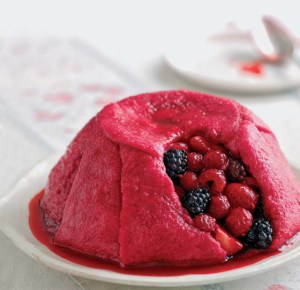
At the beginning of the course I had plans for a small personal project. The intention was to create a classic English summer dish – summer pudding – and then photograph it.

Summer pudding

Howard Sooley, 2009. Summer Pudding

I loved Howard Sooley’s image then, and I still do – the light is amazing. At the time, my ambition was to produce an image as appealing as the image used in Valentine Warner’s What to Eat Now. I still intend to.

But the difference is this. At the start of the course, Sooley’s image fairly represented how I ‘saw’ images of food, how I imagined them, or previsualised them. I now see them very differently – before, during and after – in effect, the default setting of how I see images in my mind has changed, becoming more refined along with my technique and my artistic style.

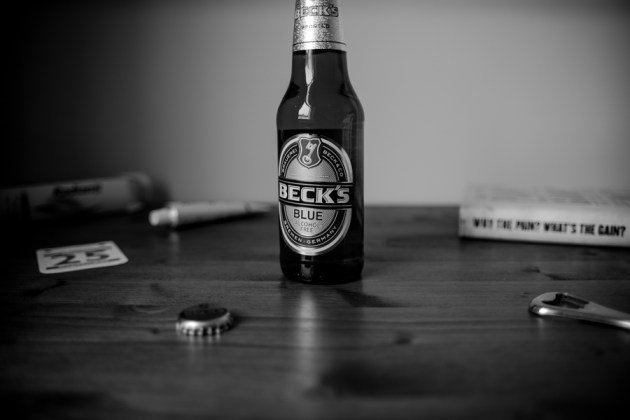
Beck's 2

Morris, 2017. Untitled # 18

I am looking forward to the next twelve months …