Advantages & Disadvantages of Online Galleries II

Advantages & Disadvantages of Online Galleries – Technical

Advantages

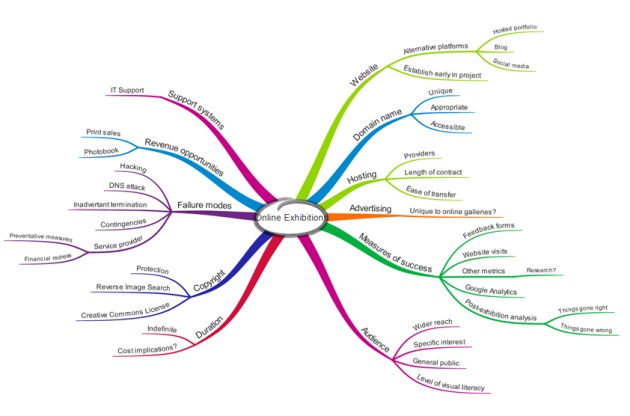
  • Engagement (interaction) is enhanced
  • Viewers can create their own path
  • Material/content can be added to, reduced, or refreshed easily and quickly
  • Immediacy – level of information can be chosen by the viewer, making it more accessible to a wider range of ages and experience levels
  • Message can be absorbed without difficulty of obtaining it
  • Enhanced learning – materials can be used for education
  • Extended learning – links to other websites with related content


Disadvantages

  • Museum experience is not real
  • Hands on experience is not possible
  • Not a full sensory experience – seeing, hearing, smelling and touching enhances the extent to which the experience is embedded in the memory
  • Fine detail may not be faithfully reproduced online
  • Potentially, poor image quality
  • Internet connection is required
  • Download speed will affect viewing experience – slow for media-rich websites
  • Information is easily harvested – critical thinking skills are reduced
  • Primarily a visual experience – reading skills are not encouraged
  • Cut & paste – writing skills are reduced


Output from brainstorming session – 25 March 2018

(Contemporaneous notes)


Advantages & Disadvantages of Online Galleries

Advantages & Disadvantages of Online Galleries – General

Advantages

  • Wide availability – wide demographic reach
  • Easy access
  • Cheap to view
  • Feedback collection
  • Reduced distance between audience and author
  • Reduced bureaucracy (public liability insurance, etc.)
  • Cheap to stage – no printing, mounting, framing costs; no venue costs; no commission costs
  • Permanence
  • Flexible hours (open 24 hours a day, 7 days a week)
  • (Theoretically) unlimited number of simultaneous visitors
  • Background can be tailored to images (not always possible with a physical exhibition)
  • No time, distance, space limitations
  • Updateable
  • Removes risk of damage to which physical prints may be subject


Disadvantages

  • Off the shelf options/subscription based packages may not offer a theme in keeping with the style of images
  • Technical knowledge required to build/customise website
  • Ongoing subscription costs (hosting plans, etc.)


Output of project brainstorming session – 24 March 2018

(Contemporaneous notes)

Evolving Incident

Pickering_Ships Galley

Pickering, 2008. Ships Galley

‘I tried lots of different printing processes with these.

So I photographed them originally on medium format in colour, and because the lighting conditions shifted quite a bit I ended up trying to print them in black and white and I couldn’t find a good digital inkjet paper to print them onto and I then looked at the Ilford fibre based matt paper and I realised I really needed to print them on that because it’s just got such a gorgeous sooty, soft surface and I went back and re-shot everything on 5 x 4 so I could make large scale prints from these.

So, I didn’t want to just kind of get in the groove of doing something at the time which sort of followed on from the public order work, I didn’t want to do something which just replicated that. So, I challenged myself and kind of looked at the way that the space that was being photographed could be really brought into the surface of the photograph, onto the actual surface of the paper and sort of create this kind of breakdown between subject and object. So, yes the prints really are quite special in that series’ (Pickering, 2018).


As a guest lecturer, Sarah Pickering provided contextualisation for projects including Public Order, Art & Antiquities, and Explosion which was informative and insightful.

Especially interesting, as well as being timely and relevant as I endeavour to develop the images for my final major project, was hearing her describe the evolution of the images for Incident in uncompromising pursuit of a particular aesthetic.

‘Pickering’s Incident pictures (2009) are shot at the Fire Service College, but in facilities designed less for forensic analysis than for logistical and tactical training. Sparse rooms built of concrete and metal contain simple forms such as a steel framed bed, filing cabinets, chairs, and human-shaped dummies made to withstand fire for future use. The only evidence of human presence is seen in finger and foot-prints in the ash, traces of life that activate these charred spaces. Pickering takes inspiration from the grayness of the scene by pushing the contrast of her matte silver gelatin pictures to emphasize the expressive markings and their relationship to drawing’ (Irvine, 2010).

Describing it as a ‘push/pull’, Pickering suggests that her work has dual qualities, being both ‘seductive yet repelling’, with the ‘troubling’ nature of the images being an aspect which elicits the viewer’s attention.

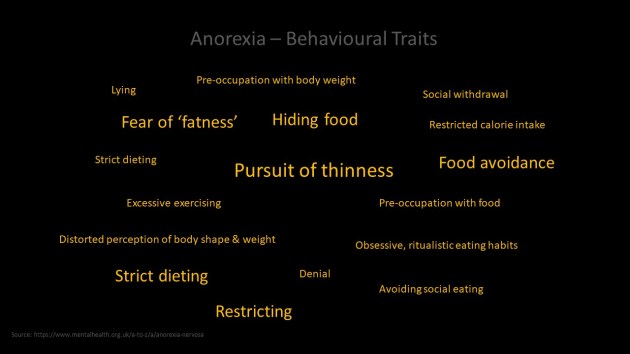
Again, I feel this is relevant to the development of images for Jo-Ana, which will provide a visual description of life with the eating disorder anorexia nervosa from the viewpoint of a recovered anorexic.

Finally, I am able to relate to Pickering’s view on the development of her practice, development based as it is on an approach which balances intuition with hands on experimentation.

Reflecting on the development of her practice over the course of several projects, Pickering advises ‘you can step away but you can’t do everything in one go’.


Links

http://www.sarahpickering.co.uk/


References

Irvine, Karen (2010). ‘Incident Control’. Museum of Contemporary Art [online]. Available at: http://www.mocp.org/exhibitions/2010/04/sarah_pickering.php (accessed: Wednesday 14 February 2018)

Pickering, Sarah (2018). ‘Guest Lecture (Research) – Sarah Pickering’. Lecture to PHO705 17/18 [online]. Available at: https://flex.falmouth.ac.uk/courses/86/pages/guest-lecture-research-sarah-pickering?module_item_id=8342 (accessed: Wednesday 14 February 2018)

I Want to Disappear: Mafalda Rakos

‘Eating disorders are not just about food or the desire to be thin, and they are much more widespread than commonly assumed.

Worldwide, up to 70 million individuals suffer from Anorexia, Bulimia or Binge Eating; affected persons are of all genders, appearances and ages. Research confirms that young women and girls in industrialized nations are at the highest risk to be affected.

One out of ten … will experience an eating disorder at least once in their lifetime. Nevertheless, the sources and effects of this illness are still highly stigmatized, discreeted and excluded from societal discourse.

In I want to disappear, 20 young women intimately share their testimonies with the viewer. What does it feel like to be affected? How is this conflict linked to one’s own (sexual) identity, and why does controlling one’s body help someone to feel “better”, even just for a short time?

Altogether they provide a surprising and confrontative insight into the personal conflicts, ruptures and insecurities which lie at the root of the disease. Very soon, a new perspective is revealed: eating disorders are never a sign of weakness. And one is by no means alone with it.’

– I want to disappear, Mafalda Rakos

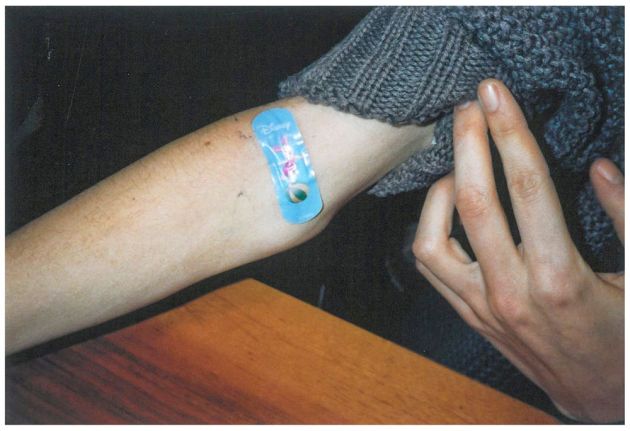
R., Vienna, 2013. Rakos, 2015. R., Vienna, 2013

Rakos 1

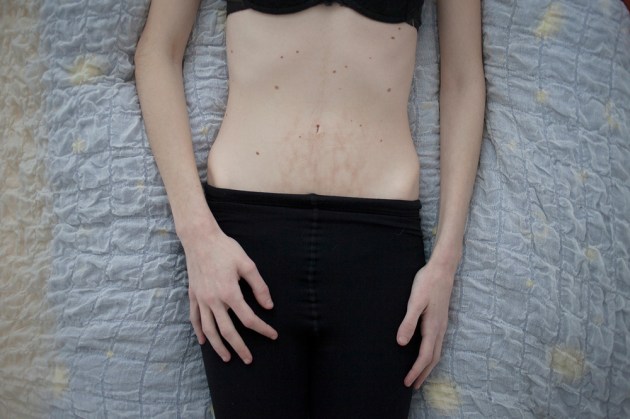
Rakos, 2015. C., Vienna, 2015

The images which feature in Mafalda Rakos’ I want to disappear are often disturbing and always poignant.

They visually describe life with anorexia from the point of view of the sufferer, indeed the collaborative project is a collection of images, drawings, texts and other material provided by the subjects of the study, although this is a term Rakos tries to avoid, preferring instead to use protagonists.

Arguably, Rakos’ methodology is a form of photo elicitation.

Whilst the term photo elicitation refers to a method of social scientific investigation in which an image is provided, either by the interviewer or the interviewee, and the response of the interviewee to that image is recorded, in Rakos’ study, the images themselves are the response.

Each image contains a detail which is the punctum – a detail which ‘pricks or bruises’ (Barthes, 1980) the viewer’s consciousness, evoking a sense of emotion.

The significance of these details may not be immediately recognisable: a plaster on an arm, an exposed abdomen – at first glance perhaps innocuous.

A lingering gaze, however, together with the context of the project, reveal something more disturbing: the plaster covering the puncture site for the latest blood test at the clinic for eating disorders, the burn marks on the abdomen which result from the use of hot water bottles to combat the ever-present feeling of icy coldness so typical of anorexia.

Due to the collaborative nature of I want to disappear, it is impossible to identify one particular style of photography beyond a recognisable documentary/reportage. A range of aesthetics is present in the body of work with images being taken from many angles, images in colour and black and white, and images presented in various ratios. This variety, I feel, acts to provide a cohesion for the work of several photographers, there is unity in variety.

This is relevant as I explore the different ways in which the images for Jo-Ana can be produced in terms of angle of view, colour or black and white, and aspect.

I want to disappear is not a time-based series, each image depicts how anorexia and its impact can be summed up for each individual at the particular moment of taking the photograph. How circumstances develop over time for either the individual or individuals is not the important factor here, instead what is significant is how several unique moments in time can provide a wider, summative description of life with an eating disorder.

This is in contrast to Jo-Ana which is a longitudinal study: the story of one individual told over a period of time through a series of images.

Rakos’ approach in taking a wider, summative approach to describe life with an eating disorder is not unique: Laia Abril’s Thinspiration, for example, also makes use of discrete moments in time recorded and shared by a number of individuals, with Abril harvesting the images herself once they had been shared.


Reference

Barthes, Roland (1980). Camera Lucida: Reflections on Photography. New York: Hill & Wang

Thinspiration: Laia Abril

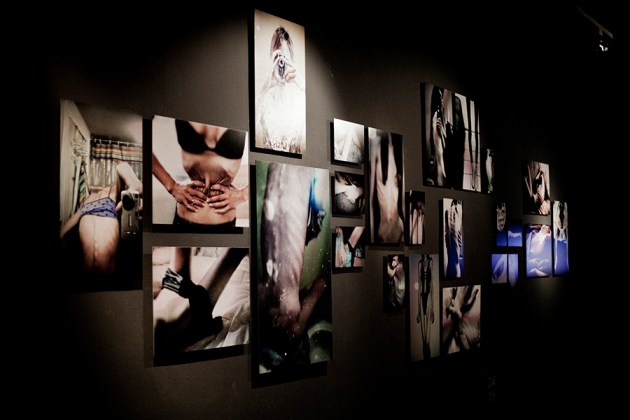
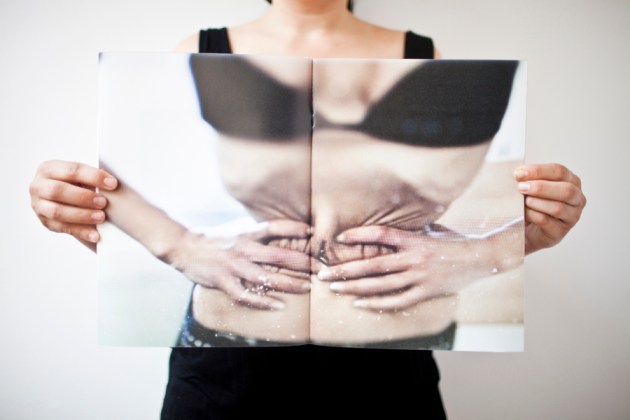
‘The Pro-ana community has turned anorexia (Ana) into its dogma. They venerate the illness giving meaning to their totalitarian “lifestyle”. It’s a virtual reality where they state commandments, share motivating tricks and exchange hundreds of images of thin models via their blogs. They have created Thinspiration, a visual new language – obsessively consumed to keep on wrestling with the scales day after day. Now, they evolved interacting with their cameras portraying their bony clavicles or flat bellies; or consuming extreme anorexic images, the Pro-ana have made Thinspiration evolve. I re-take their self-portraits, photographing and reinterpreting their images from the screen, resulting the visual response to the bond between obsession and self-destruction; the disappearance of one’s own identity. The project is a personal and introspective journey across the nature of obsessive desire and the limits of auto-destruction, denouncing disease’s new risk factors: social networks and photography.’

Thinspiration, Laia Abril (2012)

Abril 4

Abril, 2012. Thinspiration – exhibition
Abril 3

Abril, 2012. Thinspiration – book detail

In her own words, Laia Abril’s photography examines the ‘most uncomfortable, hidden, stigmatized, and misunderstood stories’.

Interviewed by Anna Mola for Private Photo Review, Abril’s motivations for exploring eating disorders through the medium of photography are very clear.

The intention behind Thinspiration, Abril informs us, was to challenge the widely held misconception that all eating disorders are about a girl who won’t eat.

Abril favours working with subjects which are close to her personal experience. Subjects which, because of this closeness, she finds are easier to connect with and subsequently translate for an audience. Indeed, Abril has first-hand experience of one particular eating disorder, having suffered from bulimia for ten years before completing a year of treatment in 2010.

Seeing herself as an intermediary, Abril describes herself as visiting (mental) places nobody wants to go to, digesting issues and producing work which people can relate to and which evoke empathy.

Abril describes working in an intuitive way in the earlier stages of her career. She goes on to explain that whilst still developing in an organic way, her work is now more informed by her vision for the finished body of work and that experience in knowing what a finished body of work will look in relation to a given platform plays a major part in development.

Producing work which is consumed across a range of platforms simultaneously, Abril informs us that the initial platform for her work sets the mood for the work, and that this is fixed. However, she goes on to tell us that whilst work is produced with one particular platform in mind from inception, she does adapt work in later stages to suit alternative platforms with the essence, or the soul (mood) of the work remaining unchanged.

Generally, Abril’s work is produced initially as a photobook which she suggests offers the audience time to digest the difficult and complex issues which are the subject of her work.

With regard, however, to her multi-platform style of presentation, Abril identifies the complexity of the issues she examines, together with the need to work outside her comfort zone, as being the driving factors.

In terms of relevance to my photographic practice, it would appear that Abril and I share a common aim – that of educating to prevent.

‘Above all, life for a photographer cannot be a matter of indifference’ (Robert Frank).

I believe that as photographers we have a duty to highlight social issues, to raise awareness.

There were several different possible subjects for my Final Major Project and each one was explored for its advantages and disadvantages. Once I decided on exploring anorexia and the pro-Ana culture it seemed it seemed immediately natural to think in terms of publishing the body of work as an online gallery with accompanying audio-visual. It seemed equally natural to think about how the life of the project could be extended by producing a photobook, and further extended by exhibiting in schools and colleges.

It is, therefore, reassuring to receive confirmation that such a multi-platform, multimedia presentation strategy has been used so successfully by Abril.

I have a very clear vision for the way I want the online gallery to look, and this vision was established very early in the project. Other platforms will utilise the same images, adopted appropriately – again this intention was determined at the beginning and is a strategy also employed successfully by Abril.

Previously I have cited Goldin as one of the informers of my practice due to her preference for gritty, longform style documentary photography. It is, therefore, interesting to note that Abril also offers Nan Goldin as an influence upon her work.

Clearly, Abril is a skilled visual storyteller and an accomplished publicist. Working intuitively in the early stages of my career leads me to implement some of the strategies employed so skilfully by Abril.

This leads me, then, to ask the question what would I do differently?


References:

Abril, Laia (2018). ‘A Conversation with Laia Abril’. Conscientious Photography Magazine [online]. Available at: https://cphmag.com/conv-abril/ (accessed 07 March 2018)

Abril, Laia (2012). ‘Laia Abril – Thinspiration’. Private [online]. Available at: https://www.privatephotoreview.com/2012/10/laia-abril-thinspiration/ (accessed 06 March 2018)

Laia Abril (2018). ‘Thinspiration’. Laia Abril [online]. Available at: http://www.laiaabril.com/project/thinspiration/ (accessed 08 February 2018)
On Reflection: Week 5, FMP

Five weeks down, 25 to go …

5/30 ths

16%

Not so scary.

What makes it intimidating is the speed at which the first five weeks of the 30 allotted for the Final Major Project (FMP) have passed.

Fortunately, progress in that time has been significant.

One aspect of my FMP which has required some lengthy is the style of shot.

It has been suggested that some repetition is creeping into my work. On the basis of this, it was recommended that I study the early still life images of Irving Penn.

I am very open to both of these suggestions.

In the beginning, there was a set of objectives …

One of those objectives was to undertake a photographic exploration of the still life paintings of the old Dutch masters.

With few exceptions, the pronkstilleven†1 of the Dutch golden era are presented in tabletop still life form.

I do have a problem with having come so far only to change direction, I want to stay true to original objectives. Research is vital, being informed is important. But for me, every part of the MA leads to the FMP: all the research, all the images – each phase using the output of the previous phase as a foundation upon which to build. It’s progressive and, whilst there needs to be a discernible improvement throughout the MA, I think it is important to maintain some point of contact with the original intent, some trace to demonstrate the evolution.

‘Of course, you should also have a table upon which to set up your still life. The table may appear time and time again in your paintings, becoming a familiar subject in your art, so choose a table that is aesthetically interesting to you’ (Friel, 2010).

Ultimately, I have to be happy with the work I produce or be happy with the way in which I produce my work.

‘Don’t be afraid of producing work you like, instead of what you think other people will like’ (Simmans, 2018).

So many aspects of my work required development at the start of the MA: technical ability, creativity, visual narrative skills, research skills, critical analysis …

These points alone are, I believe, adequate justification for resolving my FMP and, therefore, my MA by continuing to produce work in a traditional still life style.

I was introduced to visual anthropology in module two of the MA, and to repeat photography in module four – subsequently both have become important to me in terms of photographic practice.

Expanding on this, I think documenting the way we live our lives, producing a record for future generations is important, and I believe repeat photography is an invaluable way of documenting situations which develop over a period of time.

As mentioned above, my visual narrative skills needed considerable work and I have worked hard to improve this aspect of my craft.

I think that resolving my FMP by producing still life images in a traditional style places a greater emphasis on the story itself: the subjects, their composition and the message they carry has to create engagement with the audience.

The visual narrative has to shoulder a greater portion of the weight … no bad thing!


Note †1: pronkstilleven – still life


Reference:

Friel, Michael (2010). Still Life Painting Atelier: An Introduction to Oil Painting. New York: Watson-Guptil Publications

SIMMANS, XANTHE (2018). ‘Advice on Studying’. Lecture in progress.com [online]. Available at: https://lectureinprogress.com/advice/xanthe-simmans (accessed: 05 March 2018)

Notes on Tutorial: 28 February 2018

Contemporaneous notes of a 1-2-1 tutorial: Dr Wendy McMurdo – Wednesday 28 February 2018, 1100 hrs

The concept for the Final Major Project was introduced: Jo-Ana – the diaries of an anorexic visually described in photographs. WM commented that this was both interesting and topical.

Laia Abril’s†1 Thinspiration was introduced as an initial point of research.

Sarah Davidmann’s†2 Ken. To be Destroyed was also suggested for its value in photographically documenting found artefacts.

The Diary Drawing’s of Bobby Baker†3 document the performance artist’s ‘experiences of day hospitals, acute psychiatric wards, ‘crisis’ teams and a variety of treatments’. Started in 1997, the drawings became a way for the artist to articulate complex emotions and thoughts to family, friends and professionals.

It was suggested that as the premise for the project was the diary entries of an anorexic, the diaries themselves should be at the very heart of the body of work.

WM indicated that an artist’s statement would be required – this could be anything from a paragraph to a page. It was also indicated that a statement would be needed to convey the thoughts of the participant (who could remain anonymous) – again, this could be from a paragraph to a page in length.

The importance of evidencing my research and reflections regarding the ethics of the project was discussed.


Links

†1 Laia Abril: http://www.laiaabril.com/project/thinspiration/

†2 Sarah Davidmann: https://www.saradavidmann.com/

†3 Bobby Baker: https://wellcomecollection.org/exhibitions/bobby-bakers-diary-drawings