FMP Test Images

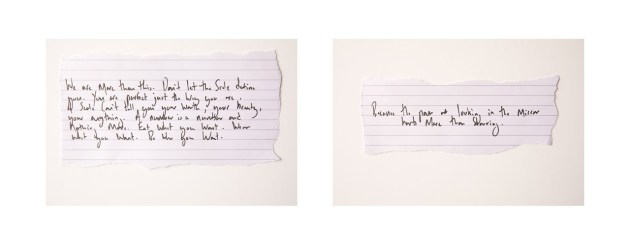
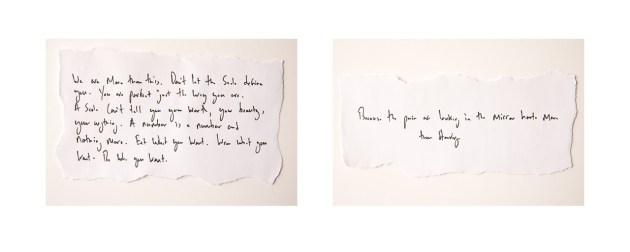
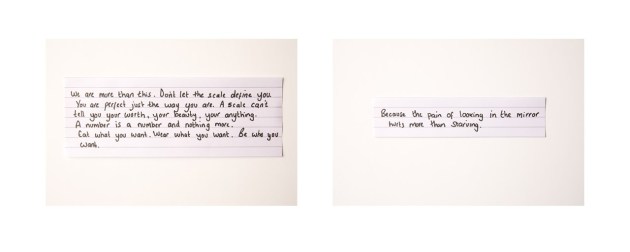
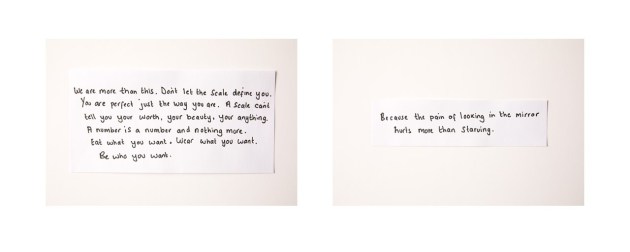
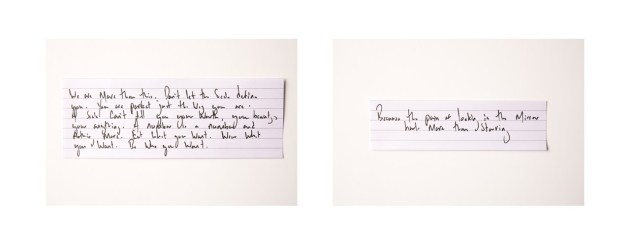
Test shots to evaluate the visual impact of handwriting/paper/finish combinations for the insertion of text into FMP images.

All images SOOC (unedited).

Custom WB.

ISO 100, f/8.0 – shutter speed as stated.

Set 1 cropped

Set 1: Lined, handwriting 1, ripped (1/15 – 1/15)

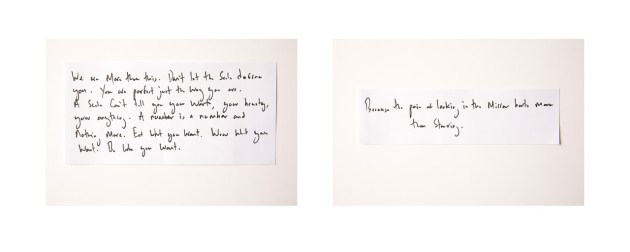
Set 2 cropped

Set 2: Plain, handwriting 1, ripped (1/25 – 1/15)

Set 3 cropped

Set 3: Lined, handwriting 2, ripped (1/20 – 1/25)

Set 4 cropped

Set 4: Plain, handwriting 2, ripped (1/20 – 1/20)

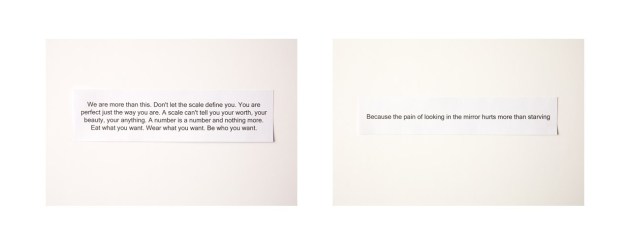
Set 5 cropped

Set 5: Plain, typed, ripped (1/20 – 1/20)

Set 6 cropped

Set 6: Lined, handwriting 1, trimmed (1/20 – 1/25)

Set 7 cropped

Set 7: Plain, handwriting 1, trimmed (1/25 – 1/20)

Set 8 cropped

Set 8: Lined, handwriting 2, trimmed (1/20 – 1/25)

Set 9 cropped

Set 9: Plain, handwriting 2, trimmed (1/25 – 1/25)

Set 10 cropped

Set 10: Plain, typed, trimmed (1/20 – 1/20)


Square cut, or trimmed images have less visual appeal. The ripped finish adds character to the images in sets 1 to 5.

Images with handwritten text have more visual appeal than those with typed text, which appears somewhat soulless.

From a technical point of view, this exercise has been a failure in terms of image quality. There is a huge variation in image quality arising from fluctuating natural light conditions. Repeatability and reproducibility are key requirements for the series.

Chromatic aberration is observable in the images and steps would need to be taken to either prevent this (preferred) or to correct in post-production (not preferred).

Being positive, this experiment was intended as a starting point, rather than an end point. Much valuable information has been derived.

Moving forward.

The intention is to repeat the exercise using a background which is better able to hold the subject in place (maintaining the subjects in the correct location was a significant issue due to slippage in this first experiment), and also using foamboard reflectors which were unavailable during the first experiment (now available).

The exercise will also be repeated using a light source with a constant output (LED lighting or a speedlite – to be confirmed).

Artefacts and Ethics

Taryn Simon’s Contraband (2010) is a series of 1,075 photographs of items seized over the period of one week from passengers and express mail entering the United States via the U.S. Customs and Border Protection Federal Inspection Site and the U.S. Postal Service International Facility at John F. Kennedy International Airport, New York.

Anne Collier’s oeuvre incorporates appropriated images and found objects into still life compositions skilfully photographed against plain white (or black) backgrounds. Collier’s images raise questions concerning gender and power whilst demonstrating her interest in the mass media and popular culture of the 60s, 70s and 80s.

French photographer Sophie Calle employs a heavily investigative approach to produce images which provide a voyeuristic disclosure of the private lives of strangers. Again, the images are reliant upon found objects, The Hotel, is a body of work which Calle describes accordingly:

On Monday, February 16, 1981, I was hired as a temporary chambermaid for three weeks in a Venetian hotel. I was assigned twelve bedrooms on the fourth floor. In the course of my cleaning duties, I examined the personal belongings of the hotel guests and observed through details lives which remained unknown to me. On Friday, March 6, the job came to an end’ (Calle, 1999).

The premise for the FMP is a series of still life images based on pertinent diary entries of a former anorexic. The relevance of the aforementioned artists to my practice is, therefore, the approach taken by each in documenting artefacts.

Contraband_3_Simon

Simon, 2010. Unidentified liquid, hidden in Thermos in satin bedding

Simon’s Unidentified Liquid (2010) is an outstanding image. Pink satin and golden liquid are depicted with a glorious richness, the textile’s fine texture is portrayed exquisitely by the beautiful lighting which also gives the shadows a depth which is almost tangible.

Double Marilyn_Collier

Collier, 2007. Double Marilyn

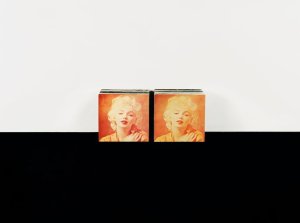
Double Marilyn (2007) is an antiseptically clean presentation: identical LP album covers are photographed side by side against a simple black and white background, the lighting is exceptionally well-balanced resulting in a subtlety of shadow which is almost total. Despite the no frills approach seemingly taken by Collier which shows the subjects as being what they are – artefacts with a history, it is an aesthetically pleasing image capable of holding the viewer’s gaze.

sophie-calle-rachel-monique-56

Calle, 2017. Sophie Calle: Rachel Monique

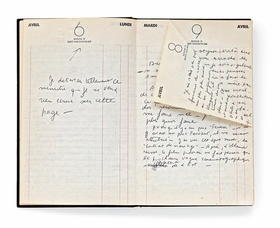
Sophie Calle: Rachel Monique is the story of Calle’s mother told through extracts from her mother’s diary and family photographs. Items are photographed in a very neutral way – against a crisp, clean background and with diffused lighting producing soft, graduated shadows – the intention being clear, to allow the artefacts to tell their own story devoid of any bias which might result from a more artistic presentation.

sophie-calle_english-grey-final2Calle, 1979. The Striptease

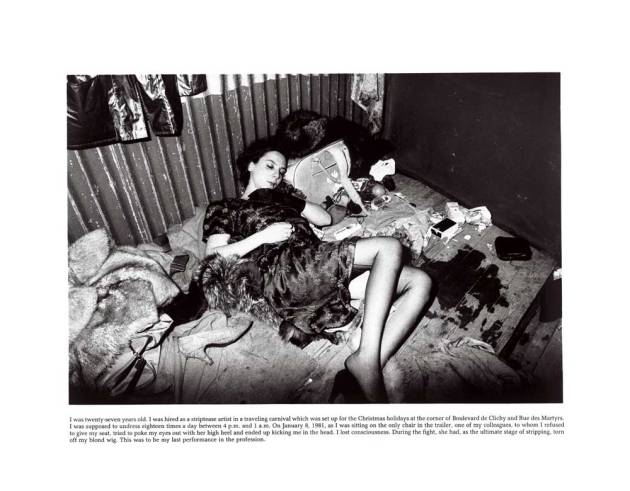
Many of Calle’s images are accompanied by text written by the photographer in order to expand the narrative. The Striptease (1979) demonstrates the matter of fact yet interesting manner in which Calle successfully combines the two elements of image and text. This is also highly relevant given the premise underpinning my FMP.

How, then, do I present my images? How do I effectively include the essential first-person account into a series of still life images?

There is a valid argument for photographing the actual diaries and the salient entries contained within its pages. As we have seen, this worked very successfully for Simon, Collier and Calle.

There is integrity through authenticity.

However, the participant in my research is reluctant to allow this because the pages of her diaries contain other entries which are not relevant to the project, many of which are sensitive and/or personal in nature. I am privileged to observe the diaries and the entries they contain – it is not a privilege which extends as far as the public domain.

Brady et al posit that ‘once a visual image is created it becomes very difficult to control its use or remove it from the public arena if the participants decide that they no longer want to be represented in a fixed visual trope for ‘time immemorial’’ (Brady and Brown, 2013 cited in Mannay 2016).

This may deal with a participants change of heart after the life of the study, but what of the situations where relevant material is contiguous with sensitive material which should not be shared.

Mannay informs us that ‘where topics are particularly sensitive and where visual images act to represent, and fix, participants for ‘time immemorial’ (Brady and Brown, 2013), researchers need to think carefully about whether this recognition is ethical, both in the moment and beyond the lifetime of the study (Mannay, 2016).

Negotiation is an essential aspect of participatory visual research but there has to be some compromise.

There are two positions, then, on the use of artefacts. It boils down to which ideal one is prepared to compromise. If the original artefact is not used, artistic integrity is compromised. If the original artefact is used, the wishes and trust of the participant are betrayed, compromising professional and personal integrity.

For me the choice is clear.

There is fundamental need to carry out impartial, objective research. As a visual researcher, I have an overriding duty to ensure that the needs of the participant are met: a right to have a voice which is heard whilst anonymity and confidentiality are maintained.


References

Calle. S. (1999). Double Game. London: Violette Editions

Mannay, Dawn (2016), Visual, Narrative and Creative Research Methods: Application, Reflection and Ethics. Oxon: Routledge

Notes on Tutorial: 24 April 2018

Contemporaneous notes of a 1-2-1 tutorial: Dr Wendy McMurdo – Tuesday 24 April 2018, 1000 hrs

Progress to date:

Image making has been adversely affected by circumstances beyond my control (outlined in previous email).

Other activities, for example, obtaining a domain name, website hosting, and website development have progressed further than expected.

Time is built into the project plan for contingencies.

Work has continued on image development.

Work has started on the project descriptor.

As the intention is to tell a particular story through a series of still life images, it is necessary to source and obtain a number of props: with one exception, the necessary assets have now been acquired.

I am not familiar with Adobe Indesign and have, therefore, been taking steps to familiarise myself with the application.

Issues?

The premise for the FMP is a series of still life images based on pertinent diary entries of a former anorexic. The use of text in images is new to me. It is something I have instinctively felt to be right for this project, but have, nevertheless, questioned it’s use, benefits and appropriateness.

Several artists have incorporated text into their work and research into their work has enabled me to reconcile the use of text within my own practice for the FMP.

A CRJ post will record this research (see ‘Text Messages’).

I have also struggled with a format which successfully showed a still life image with text. Through experimentation I have found a format with which I feel comfortable and which is repeatable and reproducible throughout a series of images.

Moving forward …

As a result of image making being delayed, the plan is to develop a notional timetable of activities for the next month – the intention being to bring the situation back in-line with the project timing plan.

The suggestion is to meet on a weekly basis.

Technical issues have previously been experienced with conferencing software. The proposal is to hold discussions via mobile telephone, having appropriately distributed applicable documentation/images in advance by email.

It was noted that the 1st person account provided by the text element of the FMP images was a vital component supporting the still life element of the images.

Researching the practice of the following photographers was advised:

Taryn Simon†1

Anne Collier†2

Sophie Calle†3

Additionally, continued documentation of the project with particular reference to the research and image making processes in the CRJ was encouraged.

Dates and times were agreed for future meetings.


Links

†1Taryn Simon: https://www.gagosian.com/exhibitions/september-22-2010–taryn-simon

†2Anne Collier: http://www.nyphotoreview.com/NYPR_REVS/NYPR_REV2243.html

†3Sophie Calle: http://www.artbook.com/9782365111171.html

Anorexia – Statistics

UK eating disorder charity Beat provides the following statistics.


People in the UK believed to have an eating disorder

1.25 million


Most common eating disorder

Anorexia – 10%

Bulimia – 40%

EDNOS †1 – 50%


Likelihood of recovery

Research suggests the following:

46% of anorexia patients fully recover

33% improve

20% remain chronically ill

Similar research into bulimia suggests:

45% make a full recovery

27% improve considerably

23% suffer chronically


Duration

According to Australian research, the average duration for anorexia is 8 years, and 5 for bulimia

Both illnesses can become severe and enduring

Support in the early stages of the illness is key to a full recovery


Impact of disease

‘Anorexia has the highest mortality rate of any psychiatric disorder, from medical complications associated with the illness as well as suicide. Research has found that 20% of anorexia sufferers will die prematurely from their illness. Bulimia is also associated with severe medical complications, and binge eating disorder sufferers often experience the medical complications associated with obesity. In every case, eating disorders severely affect the quality of life of the sufferer and those that care for them.’

Note †1: EDNOS – Eating disorder not otherwise specified. This figure include BED – binge eating disorder


Source


Beateatingdisorders.org.uk (2018). ‘Statistics for Journalists’. Available at: https://www.beateatingdisorders.org.uk/media-centre/eating-disorder-statistics (accessed: Friday 23 February 2018)

‘Text Messages’

Continuing to examine alternative relationships with food, the premise for my final major project, Jo-Ana, is a series of still life images which visually describe life with anorexia.

Based on pertinent diary entries made by a female anorexia sufferer, the project presents an opportunity to incorporate text into my images. This is a significant departure from my practice to date. Instinctively feeling this to be right for the project I have, nevertheless, questioned its use, benefits and appropriateness.

Several artists have incorporated text into their practice and research into their work has enabled me to reconcile the use of text within my own practice for the project. It is worth noting that image and text have a considerable history, with mediaeval manuscripts, for example, bringing the two together to establish layered meaning and placing it within the reach of the illiterate. In this sense, images are a democratising phenomenon.

Kurt Schwitters produced work covering several genres including Dadaism and Surrealism.

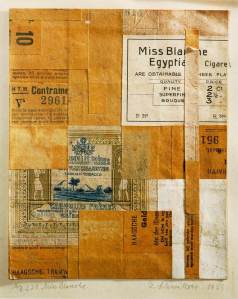
Miss Blanche (1923) is an example of how, using segments of found text, a Dadaist trait, he allowed his audience to find their own meanings.

Miss Blanche

Kurt Schwitters, 1923. Miss Blanche

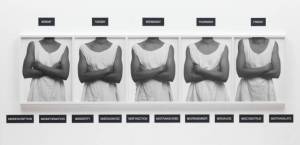
Lorna Simpson’s signature photo-text, which involved the inclusion of short passages of text, often superimposed on the photographs, to introduce new levels of meaning to images.

Five Day Forecast 1991 by Lorna Simpson born 1960

Lorna Simpson, 1991. Five Day Forecast

Jo Spence combined image and text to protest the illness she suffered and what she perceived as the interventionist way in which her treatment was carried out.

How Do I Begin

Jo Spence, 1984. How Do Begin to Take Responsibility?

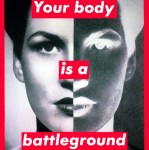
Barbara Kruger’s work involves the addition of text to appropriated images in order to promote thought and discussion relating to contemporary issues.

Battleground

Barbara Kruger, 1989. Battleground

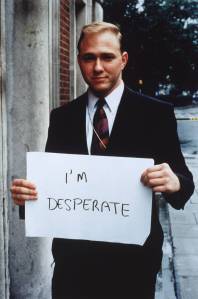
Gillian Wearing’s I’m Desperate (1992-3) fundamentally depended upon the inclusion of text within the images. Without text, would the images have been anything other than a collection of snapshots of strangers?

'I'm desperate' 1992-3 by Gillian Wearing OBE born 1963

Gillian Wearing, 1992-3. I’m Desperate

Relevance to my practice …

Clearly, there are cases where the images should speak for themselves. However, there are also some very good reasons for the use of text within or alongside images.

Text can help to steer the discussion in a particular direction. As photographers don’t we endeavour to do this anyway when we shape light, drawing attention to a specific part of an image and away from other areas through the careful placement of highlights and shadows respectively?

“A photograph, when it stands on its own, potentially has mutilayered meanings … Combined with text or text fragments, various possible meanings contained in a photograph can be orientated to divergent discursive directions.” (Van Gelder and Westgeest, 2011).

Additionally, text can enhance the impact of an image by providing information that, if absent, would fail to convey the intended narrative.

Furthermore, text can elicit discussions which otherwise might not be considered.

Words have agreed, coded meanings. The compositions created by artists are more open to interpretation. When the intention is the reinforcement of a visual narrative through the use of text, the image/text combination requires careful consideration to avoid diluting the message or creating dissonance.

Rosler describes images and text as two ‘descriptive systems’. There is a space between these two systems. Both are unique in terms of the message they can convey and how, and both are also unique in terms of what cannot be said. Together, though, the image/text combination can produce something greater than the sum of the parts. It is this synergy that allows us to fill the space, through interpretation, between the two systems – in effect bridging the gap. And the argument for the text? Well, that gives us a nudge in a certain direction.


References

Rosler, M. (1974-1975) The bowery in two inadequate descriptive systems [online]. Available at: http://collection.whitney.org/object/8304 (accessed: 18 April 2018)

Van Gelder, H. and Westgeest, H. (2011) Photography theory in historical perspective. Chichester: Wiley-Blackwell

FMP – Justifying the Public Outcome

‘Its own interrogatory spirit imbues visitors with a sense of permission to explore and chart their own route through the assembled works of art, and to freely ask the questions and pursue the connections that they find most intriguing’ (Rugoff in Marincola, 2006).

How do you justify an exhibition? How do you justify any form of public outcome for a body of artwork?

I think there are two aspects which need to be considered.

First, what is the purpose for an exhibition? This is more common to all types of outcome than it might at first appear.

A public outcome needs to bring art out into the public domain by one means or another. As it does so, it needs to facilitate the following:

Showing the work in the best possible light (literally and metaphorically)

Conveying the message without encumbrance

Not detracting from the work, instead augmenting it

Providing an enriched viewing experience

Evoking a sense of emotion

Stimulating (action or debate)

There may be more. These are the things I would hope from an exhibition. Some expectations may be unique to a particular project – some projects may not want to show something in the best possible way, quite the opposite, in order to initiate a response from the audience.

This brings us to our second question – does a specific type of outcome allow that purpose to be fulfilled?

Jo-Ana will be exhibited via an online gallery, so taking that as a working example, the question becomes will an online gallery show my work in the best possible way?

It was felt that a dedicated website was essential in order to successfully display the body of work. Introducing the work as an additional page in an existing website would not do the work justice.

Furthermore, Jo-Ana is a series of images supplemented by text in order to provide the viewer with context and, therefore, an enriched viewing experience. There are four pages of supplementary text. Adding these into an existing website would be possible, but would not allow the viewer to navigate through the exhibition easily. This would detract from the viewing experience.

Communication between the artist and the audience is essential, particularly in terms of developing as an artist. Such communication is facilitated by a Contact page, and a Visitors Book. Locating Jo-Ana into an existing website would prevent any communication and feedback being exclusive to the project, which is necessary.

Creating a website specifically for the project enables the environment (background, logos, typeface, etc.) to be tailored to the body of work. This would not be possible with an existing website.

Why an online gallery and not a physical exhibition?

Each exhibition, irrespective of the form it takes, has a target audience. It may be viewed by individuals outside the target audience, but predominantly, those who the work will fit a specific demographic.

Wilson et al. (2006, cited in Johnson, 2015) inform us that ‘pro-eating disorder websites host communities of individuals who engage in disordered eating and use the internet to discuss their activities’.

How prevalent is the use of such websites?

Custers et al (2009, cited in Johnson, 2015) found that 12.6% (n = 90) of the girls and 5.9% (n = 42) of the boys from a sample group of 711 children and adolescents (7th, 9th, and 11th) grade had visited pro-anorexia websites.

Furthermore, a separate survey showed that 35.5% of 76 patients who had been treated for eating disorders in an outpatient clinic had visited pro-eating disorder sites (Wilson et al., 2006, cited in Johnson, 2015).

Woolf (2015) informs us that western society has a problem – the glorification of eating disorders.

‘Even if you’re not actively looking for encouragement with an eating disorder, even if you avoid the internet altogether, you can’t avoid the overwhelming message of our age, that weight loss is good, weight gain is bad, that thinner (harder, leaner, greener) is better. We live in a hypervisual age, with most of us – especially the young – confronting thousands of images every day. The focus on women’s bodies is intense, in every magazine, website or TV advert, on every billboard and celebrity shot, and in the conversations of friends, mothers and sisters around us.

The effect can be profound, and yet still eating disorders are misunderstood. They are dismissed as a teenage, female condition (although male eating disorders are on the increase) or misrepresented as faddy dieting, body hang-ups, a phase they’ll “grow out of”. In fact, the opposite is true: eating disorders are highly addictive, and self-starvation becomes involuntary.

Anorexia has the highest mortality rate of all mental illnesses, more deadly than schizophrenia. One in five anorexics will die, either from physical complications or suicide’.

A primary aim for Jo-Ana is to raise awareness in two key areas: amongst the family, friends and colleagues of anorexics – helping them to recognise the signs and symptoms of the illness; and amongst anorexics – where removing the stigma is essential, helping bring the discussion out into the open, enabling dialogue with interventionist channels, and demonstrating that recovery is possible.

Clinical studies have proven that early intervention is essential for the successful long-term treatment of eating disorders.

An online exhibition enables Jo-Ana to effectively reach its primary demographic target – a readily accessible target audience which is already online, is using the same technology that will be used to present the exhibition, and is using hashtags to exchange information.

In essence, then, an online exhibition is taking the artwork to the audience, or as close as it is practically possible, rather than asking the audience to come to the artwork.


References

Johnson, Hadley A. (2015) I Will Not Eat – A review of the Online Pro-Ana Movement [Online]. New York: Adelphi University. Available at: https://www.semanticscholar.org/paper/I-Will-Not-Eat-A-Review-of-the-Online-Pro-Ana-Move-Johnson/b7a8b83bec0e6df021b83d4696ff8ac49c6819c8 (accessed: 09 February 2018)

Rugoff, R. (2006). ‘You Talking To Me? On Curating Group Shows that Give You a Chance to Join the Group’, in MARICOLA (ed.) What Makes a Great Exhibition? Philadelphia: Philadelphia Exhibitions Initiative

WOOLF, Emma (2015). ‘How social media is fuelling the worrying rise in eating disorders’. The Telegraph, 04 June 2015 [online]. Available at: http://www.telegraph.co.uk/women/womens-health/11649411/How-social-media-is-fuelling-the-worrying-rise-in-eating-disorders.html (accessed: 30 January 2018)
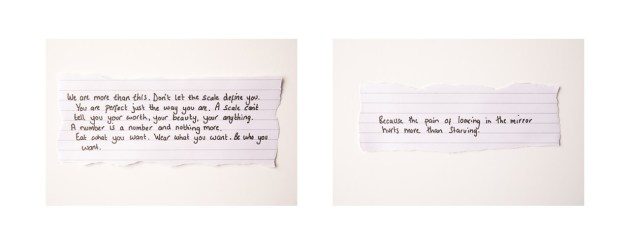
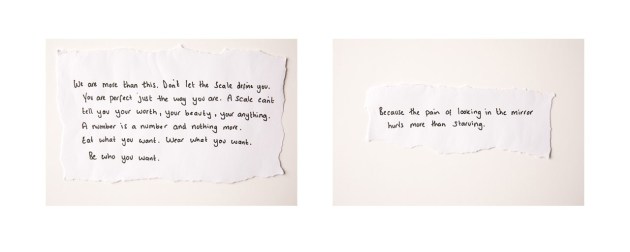
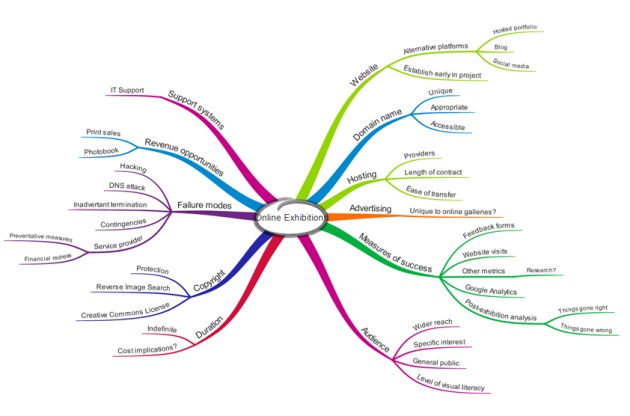
Advantages & Disadvantages of Online Galleries II

Advantages & Disadvantages of Online Galleries – Technical

Advantages

  • Engagement (interaction) is enhanced
  • Viewers can create their own path
  • Material/content can be added to, reduced, or refreshed easily and quickly
  • Immediacy – level of information can be chosen by the viewer, making it more accessible to a wider range of ages and experience levels
  • Message can be absorbed without difficulty of obtaining it
  • Enhanced learning – materials can be used for education
  • Extended learning – links to other websites with related content


Disadvantages

  • Museum experience is not real
  • Hands on experience is not possible
  • Not a full sensory experience – seeing, hearing, smelling and touching enhances the extent to which the experience is embedded in the memory
  • Fine detail may not be faithfully reproduced online
  • Potentially, poor image quality
  • Internet connection is required
  • Download speed will affect viewing experience – slow for media-rich websites
  • Information is easily harvested – critical thinking skills are reduced
  • Primarily a visual experience – reading skills are not encouraged
  • Cut & paste – writing skills are reduced


Output from brainstorming session – 25 March 2018

(Contemporaneous notes)


Advantages & Disadvantages of Online Galleries

Advantages & Disadvantages of Online Galleries – General

Advantages

  • Wide availability – wide demographic reach
  • Easy access
  • Cheap to view
  • Feedback collection
  • Reduced distance between audience and author
  • Reduced bureaucracy (public liability insurance, etc.)
  • Cheap to stage – no printing, mounting, framing costs; no venue costs; no commission costs
  • Permanence
  • Flexible hours (open 24 hours a day, 7 days a week)
  • (Theoretically) unlimited number of simultaneous visitors
  • Background can be tailored to images (not always possible with a physical exhibition)
  • No time, distance, space limitations
  • Updateable
  • Removes risk of damage to which physical prints may be subject


Disadvantages

  • Off the shelf options/subscription based packages may not offer a theme in keeping with the style of images
  • Technical knowledge required to build/customise website
  • Ongoing subscription costs (hosting plans, etc.)


Output of project brainstorming session – 24 March 2018

(Contemporaneous notes)

I Want to Disappear: Mafalda Rakos

‘Eating disorders are not just about food or the desire to be thin, and they are much more widespread than commonly assumed.

Worldwide, up to 70 million individuals suffer from Anorexia, Bulimia or Binge Eating; affected persons are of all genders, appearances and ages. Research confirms that young women and girls in industrialized nations are at the highest risk to be affected.

One out of ten … will experience an eating disorder at least once in their lifetime. Nevertheless, the sources and effects of this illness are still highly stigmatized, discreeted and excluded from societal discourse.

In I want to disappear, 20 young women intimately share their testimonies with the viewer. What does it feel like to be affected? How is this conflict linked to one’s own (sexual) identity, and why does controlling one’s body help someone to feel “better”, even just for a short time?

Altogether they provide a surprising and confrontative insight into the personal conflicts, ruptures and insecurities which lie at the root of the disease. Very soon, a new perspective is revealed: eating disorders are never a sign of weakness. And one is by no means alone with it.’

– I want to disappear, Mafalda Rakos

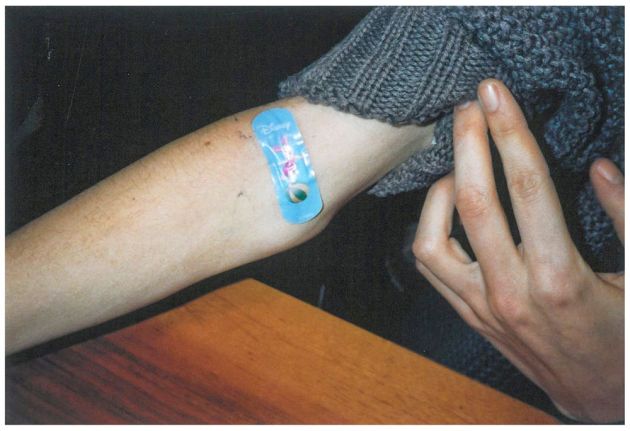
R., Vienna, 2013. Rakos, 2015. R., Vienna, 2013

Rakos 1

Rakos, 2015. C., Vienna, 2015

The images which feature in Mafalda Rakos’ I want to disappear are often disturbing and always poignant.

They visually describe life with anorexia from the point of view of the sufferer, indeed the collaborative project is a collection of images, drawings, texts and other material provided by the subjects of the study, although this is a term Rakos tries to avoid, preferring instead to use protagonists.

Arguably, Rakos’ methodology is a form of photo elicitation.

Whilst the term photo elicitation refers to a method of social scientific investigation in which an image is provided, either by the interviewer or the interviewee, and the response of the interviewee to that image is recorded, in Rakos’ study, the images themselves are the response.

Each image contains a detail which is the punctum – a detail which ‘pricks or bruises’ (Barthes, 1980) the viewer’s consciousness, evoking a sense of emotion.

The significance of these details may not be immediately recognisable: a plaster on an arm, an exposed abdomen – at first glance perhaps innocuous.

A lingering gaze, however, together with the context of the project, reveal something more disturbing: the plaster covering the puncture site for the latest blood test at the clinic for eating disorders, the burn marks on the abdomen which result from the use of hot water bottles to combat the ever-present feeling of icy coldness so typical of anorexia.

Due to the collaborative nature of I want to disappear, it is impossible to identify one particular style of photography beyond a recognisable documentary/reportage. A range of aesthetics is present in the body of work with images being taken from many angles, images in colour and black and white, and images presented in various ratios. This variety, I feel, acts to provide a cohesion for the work of several photographers, there is unity in variety.

This is relevant as I explore the different ways in which the images for Jo-Ana can be produced in terms of angle of view, colour or black and white, and aspect.

I want to disappear is not a time-based series, each image depicts how anorexia and its impact can be summed up for each individual at the particular moment of taking the photograph. How circumstances develop over time for either the individual or individuals is not the important factor here, instead what is significant is how several unique moments in time can provide a wider, summative description of life with an eating disorder.

This is in contrast to Jo-Ana which is a longitudinal study: the story of one individual told over a period of time through a series of images.

Rakos’ approach in taking a wider, summative approach to describe life with an eating disorder is not unique: Laia Abril’s Thinspiration, for example, also makes use of discrete moments in time recorded and shared by a number of individuals, with Abril harvesting the images herself once they had been shared.


Reference

Barthes, Roland (1980). Camera Lucida: Reflections on Photography. New York: Hill & Wang