Seven Days

Seven 2

Morris, 2017. Sunday

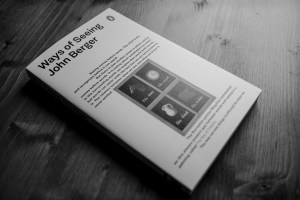
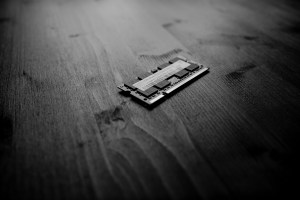
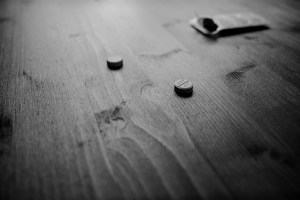
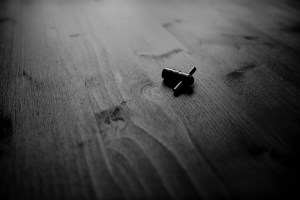
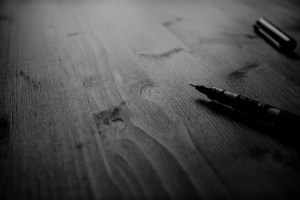
One object, one image, each day for seven days …

A week which has seen:

A day off for study,

A day of accounting,

One day consumed by a laptop repair,

Feeling rotten for most of Thursday,

Another day dominated by a seemingly simple central heating issue which wasn’t at all ‘simple’ to fix,

A day designing some promotional literature,

And a day spent refining some sleight of hand.

One

Morris, 2017. Monday

Two

Morris, 2017. Tuesday

Three

Morris, 2017. Wednesday

Four

Morris, 2017. Thursday

Six

Morris, 2017. Friday

Seven

Morris, 2017. Saturday

The brief, taken from the Photographer’s Playbook, is the first in a carefully selected series which aims to provoke thought regarding my practice and where it might be positioned in a professional context.

How have I responded to this brief, beyond the obvious images that have been produced? What change has this project initiated?

Firstly, it has prompted me to look away from food and to find alternative subjects to photograph. No bad thing at all – photographing a diverse range of subjects increases skill and experience in overcoming technical and creative issues unique to each subject: skill and experience which is transferable and can be brought back to further enhance my food photography.

Secondly, it has helped me to strengthen my visual storytelling skills – delivering a complete story, the story of my week, in just seven images. This is an area I am keen to develop.

Anyone Who Really Sees

‘Your photography is a record of your living, for anyone who really sees. You may see and be affected by other people’s ways, you may even use them to find your own, but you will have eventually to free yourself of them. That is what Nietzsche meant when he said, “I have just read Schopenhauer, now I have to get rid of him.” He knew how insidious other people’s ways could be, particularly those which have the forcefulness of profound experience, if you let them get between you and your vision.’

– Paul Strand, in Sontag On Photography, p. 183

It Begins …

My position at the start of module four …

The title of my project is The Photographic Art of Food.

Contemporary food photography, in my view, is overly concerned with the promotion of commodities. Its singular goal has become to make someone eat or drink whatever the subject of the photograph may be. Arguably, it is the art of persuasion.

Food photographer and historian Helen Grace Ventura Thompson identifies with this, stating: ‘images are no longer works of art, but promoters of consumer goods’.

I think contemporary food photography results in a very formulaic output, and in an audience expecting a certain type of image.

Consequently, I believe the principle which underpins my photography is this: images of food can be art – existing as objects which entertain and are visually appealing whilst fulfilling a practical purpose.

Putting this another way, portraying the ordinary in an extraordinary way is a principle which underpins my photographic practice.

Beauty should not be the price for documenting, recording and educating.

That even the banal can be beautiful is a view held in common with the Czech photographer Josef Sudek, whose work has also been a significant influence.

Summarising the work of modules 1 to 3,  module one saw me begin to explore the following:

The knowledge, technology and methods employed by the old Dutch masters to control light, and how the atmosphere and aesthetics of food images are influenced by light and various lighting styles

The knowledge of the elements of design that was available to the masters

Rationalising the symbolism used by the masters, evaluating their reasons for its use as well as the sources of their information.

Module two saw this exploration continue but with two project themes: Ten (recording the meals consumed by ten school children on the same March evening) and Junk Food, it began to take on an aspect of visual anthropology

Module three saw a strong focus on the visual narrative – examining the process of story-telling.

Unfortunately, a house move, injury, illness and a period without internet provision delayed my submission of the assignments for module three. My intention, then was to catch up: completing and submitting the assignments before the commencement of module four. This objective has been achieved.

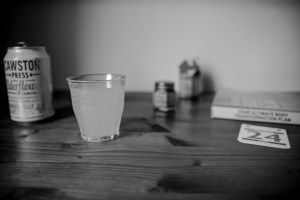
Cravings is a series of images, produced as a portfolio submission for module three, which depict the choices facing a particular individual, and the compromises which need to be made if specific goals are to be reached.

The intention is for these images to document the struggle for an athlete in preparation for competition to maintain a strict ‘clean’ diet, and the resultant desire to consume ‘comfort’ foods as the body depletes stores of fat to fuel the training.

The subjects are items craved by the athlete, and consumed as a weekly treat, or as part of a ‘cheat’ meal.
Elderflower

Morris, 2017. Untitled # 9

On Reflection: Week 1, Module Three

Module three, a new chapter in education …

Appraising the work of photographer Ed Ruscha and choosing a work on which to base a repeat photography exercise proved very informative. This was a good opportunity to evaluate different contexts, or surfaces, for the display of photographic images, and the impact of those contexts on how displayed images are viewed.

It was very surprising to find the production of an interactive ebook to be as problematic as it was. This was predominantly due to the software needed to produce and subsequently read an interactive ebook not being universally available, and also the problem of Mac operating systems not being compatible with HTML5/flash.

Despite the frustration, however, I am taking the view that this is extremely valuable knowledge. And I am pleased with the finished set of images – I think the slideshow in the CRJ is an appropriate method of presentation. Perhaps most importantly the body of work received some very positive feedback (“Inspired by … Ed Ruscha”).

… …

Revisiting an image I took in 2013 brought further frustrations because every piece of technology involved in the task had some sort of failure and everything that could go wrong logistically did so.

I wasn’t especially pleased with the end result, although this also attracted positive feedback. My printer was one of the pieces of technology which failed – and did so quite spectacularly. So, getting two images printed at all was an achievement. I don’t think the background was particularly attractive or complimentary to the images. This is an area of ongoing research.

However, the end result was extremely valuable in terms of evaluating how my photographic style has developed over a period of time. Additionally, this was invaluable as an exercise in real-time, “on the hoof” problem solving (“Repeat Photography & Rephotography”). “MacGyver … “

Looking ahead, week two presents a chance to produce a movie type trailer. This will really be unchartered territory for me. Let’s see what transpires …